can healthy choice meals be cooked in the oven safely
Yes, can healthy choice meals be cooked in the oven? Only if the specific package says its container is oven-safe; otherwise, transfer the food to an oven-safe dish first. Most frozen meal packaging is designed for microwave heating, not oven use.

Framendino, 16 Pack Artificial Chicken Nuggets Fake Fried Food Models Props for Kitchen Decor
Check Price on AmazonThat distinction matters because plastic trays, films, and cardboard sleeves can melt, burn, or release unwanted materials if heated in an oven. Here’s how to check the label, safely reheat a meal in an oven when needed, and avoid common mistakes that can leave the center cold.
Can healthy choice meals be cooked in the oven?
Sometimes, but check the package instructions before putting anything in the oven. Healthy Choice meals come in different formats, and their containers are not automatically safe for oven use just because they hold food. If the label gives oven directions and identifies the container as oven-safe, follow those directions exactly.
If the package provides only microwave instructions, do not put the meal’s plastic tray, film, or cardboard sleeve in a conventional oven. Instead, use the microwave as directed or move the food into a separate dish rated for oven use. The brand name alone does not tell you which heating method or container is safe.
This is especially important with meals sold in bowls or trays. A container may be suitable for microwave heating but soften, warp, or melt under an oven’s direct, sustained heat. Packaging instructions apply to the specific meal and container, not to every product from the same brand.
How to tell whether the container is oven-safe
Look at the preparation panel and the container itself before cooking. Search for explicit instructions such as “conventional oven,” an oven temperature, and a cooking time. A microwave icon or microwave directions do not mean the package can go in a conventional oven.
Check the fine print on the tray, film, and sleeve separately. Sometimes a meal has more than one packaging component, and each may have different instructions. If the label tells you to remove a film or sleeve, do so as directed; do not assume a part is oven-safe because another part is.
Look for a clear oven-safe symbol or wording on the container when the package gives oven instructions. If the directions are missing, damaged, or unclear, treat the original packaging as not oven-safe. Contact the manufacturer if you need confirmation for a particular product, or use an oven-safe dish instead.
What labels do and do not tell you
- Microwave-safe means the item is intended for microwave use under the stated conditions. It does not establish that it can withstand oven temperatures.
- Oven-safe means the specific item can be used in an oven within its stated limits. Follow any temperature restrictions and instructions about lids or covers.
- Recyclable describes disposal, not cooking safety. A recyclable container is not automatically suitable for heating.
- No directions listed means you should not guess. Transfer the meal to a suitable dish or use the cooking method printed on the package.
Which heating method should you choose?
For most meals, the package’s recommended method is the most reliable choice. Microwave directions are designed for the product as packaged, while oven reheating in another dish is an adaptation. The oven can work, but the meal may heat more slowly and less evenly, especially if it is still frozen.
| Method | Use the original package? | Best for | Important point |
|---|---|---|---|
| Microwave | Only as the label directs | Following the meal’s intended preparation method | Use the stated power, time, venting, and standing instructions. |
| Conventional oven | Only if the package explicitly permits it | Meals with specific oven directions or food transferred to an oven-safe dish | There is no universal oven time for every meal. |
| Toaster oven | Only if expressly approved | A small oven-safe portion or container, when permitted | Its heating elements sit close to food and packaging, so check clearance and instructions. |
| Air fryer | Generally, no—unless the package says otherwise | Not usually the first choice for a complete frozen meal | Air fryers are not interchangeable with conventional ovens, and small containers can block airflow or be damaged. |
Do not treat a toaster oven or air fryer as a safe workaround for packaging that is not oven-approved. Their heating patterns differ from a standard oven, and close heating elements can create additional risks. Transfer the food to a container specifically suitable for the appliance, and use a method that can heat the meal evenly.
How to reheat a meal in the oven after transferring it
If you need to use an oven and the package does not give oven directions, transfer the food to an oven-safe dish. This is a general reheating approach, not a brand-approved cooking time or recipe. Cooking time depends on the meal’s size, ingredients, starting temperature, and the dish you use, so check the food rather than relying on a fixed number of minutes.
- Read the package first. Note whether the meal should stay frozen, whether any components should be removed, and whether the manufacturer gives a preferred method. Follow any product-specific instructions over general advice.
- Choose a suitable dish. Use an oven-safe metal or ceramic dish that can hold the food without spilling. If using glass, confirm that the dish is rated for the temperature and temperature changes involved. Do not put a cold glass dish filled with frozen food into a hot oven unless its manufacturer says that use is safe.
- Transfer the food safely. Remove all plastic trays, film, and cardboard that are not explicitly approved for oven use. Scrape the food into the dish, keeping any sauce with it so the meal does not dry out.
- Cover the dish if appropriate. An oven-safe lid or foil can help retain moisture and reduce splatter. Keep the cover away from heating elements, and do not use a cover if the food or container instructions prohibit it.
- Heat gradually and check progress. If you do not have product-specific oven directions, avoid assuming a microwave time converts directly to an oven time. Check the meal periodically and stir or rearrange it when practical, especially if it contains separate portions of meat, vegetables, or rice.
- Verify the center is hot. Use a food thermometer in the thickest portion and check several areas when the meal has separate components. For reheated leftovers and similar mixed dishes, 165°F is a useful food-safety target. Follow any specific package direction that calls for a higher temperature or different handling.
- Let it stand briefly, then serve. Allow the food to settle before eating, particularly if it is covered or steaming. Stir again if possible, since hot sauce can hide a cooler center.
For a meal that is still frozen, heating can take considerably longer than for a refrigerated meal, and the outside may become hot before the middle. If the center remains cold while the edges dry out, a covered dish and occasional stirring can help. If the meal cannot be stirred or checked reliably, use the package’s stated method instead.
Why oven times cannot be copied from microwave directions
A microwave heats food differently from a conventional oven. Microwave energy heats water-containing parts of the food, while an oven warms the dish and food through surrounding hot air and contact with the container. As a result, a microwave time cannot be converted into a dependable oven time by multiplying it or setting the oven to a particular temperature.
Meals also vary in thickness and ingredients. A compact portion of rice may warm differently from a meal with a thick piece of chicken, dense pasta, or frozen sauce. The dish’s material and depth affect heating too. A deep bowl can warm more slowly in the center than a shallow oven-safe dish.
That is why package-specific oven directions matter. When none are provided, use an oven-safe dish and check the center with a thermometer rather than relying on appearance alone. A browned top or bubbling sauce does not prove that every part has reached a safe temperature.
Common mistakes to avoid
Putting a microwave tray straight into the oven
This is the main avoidable mistake. A tray made for microwave heating may deform or melt in a conventional oven, and plastic film can soften or burn. Use the original container only when the package clearly identifies it as oven-safe and gives instructions for that use.
Assuming the cardboard sleeve protects the meal
A cardboard sleeve may be printed with directions or help the package sit securely, but that does not make it oven-safe. Follow the preparation panel instead of relying on the material’s appearance. Remove packaging components whenever the instructions say to do so.
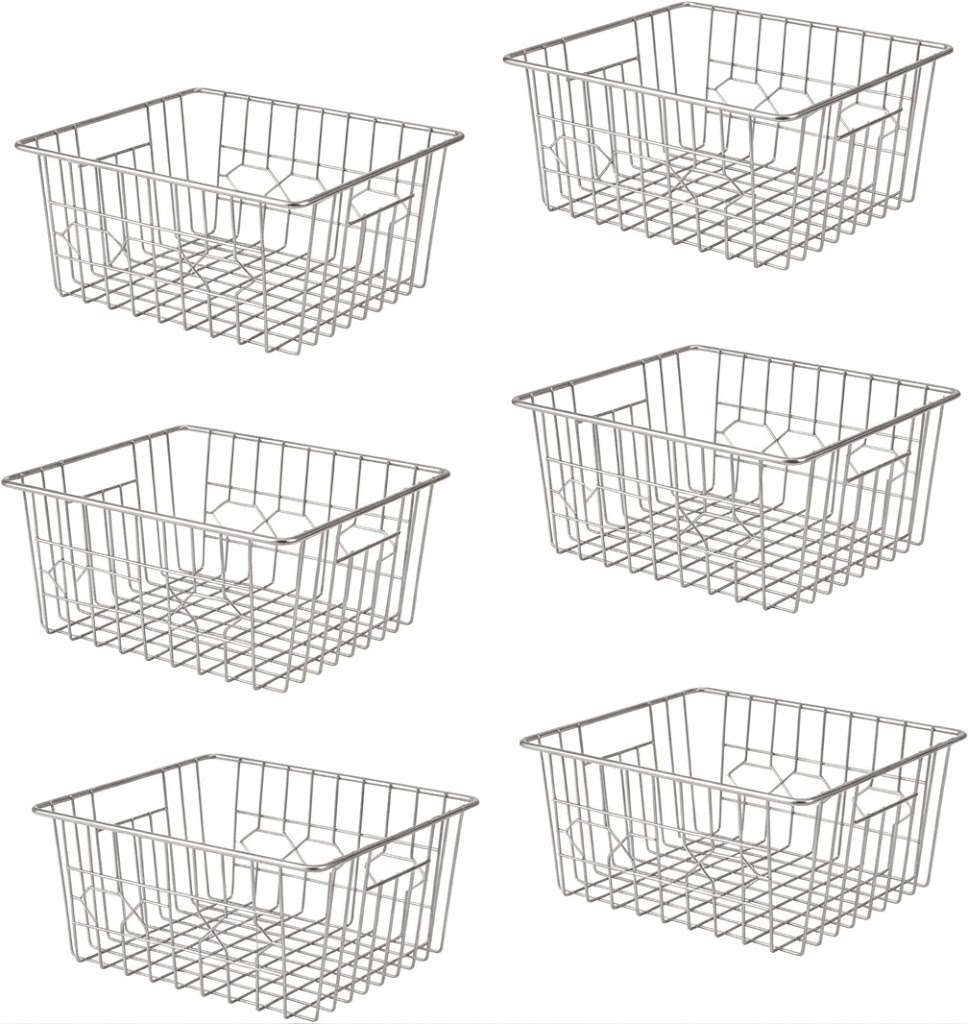
Upright Freezer Organizer Bins, Freezer Baskets for 14, 15 cu.ft Standup Freezer, Wire Storage Baskets with Built-in Handles for Frozen Foods,
Check Price on AmazonUsing a glass dish without checking it
Glass can be suitable for oven use, but not every glass container tolerates every temperature change. Moving a cold dish directly into a hot oven can cause breakage if the dish is not made for that use. Check the dish manufacturer’s guidance, and avoid placing a hot dish on a cold or wet surface after cooking.
Relying on color or bubbling
Hot edges, melted cheese, or bubbling sauce are not reliable checks for the center. Frozen meals can heat unevenly, leaving a cool section under a hot surface. Stir when possible and use a thermometer for a dependable check.
Leaving the meal at room temperature to thaw
Do not leave a frozen meal on the counter for an extended period to speed things up. If you want to thaw food before cooking, use a safe method such as thawing it in the refrigerator, and follow the package’s storage and preparation guidance. Cooking from frozen may be possible, but use product-specific instructions whenever available.
Heating the food in an unsuitable dish
Not every bowl or plate is oven-safe. Some dishes can crack, and decorative finishes or plastic parts may not tolerate oven heat. Use cookware marked or documented as suitable for oven use, and avoid containers with handles, lids, or coatings that are not rated for that purpose.
How to keep the meal from drying out
Oven reheating can expose food to heat for longer than microwave preparation, which may dry out rice, pasta, vegetables, or lean protein. A cover that is safe for oven use helps hold in steam. If the meal has sauce, keep it with the food and stir it through when possible.
A shallow dish usually makes it easier to spread food into an even layer and check the center. Avoid piling the meal into a tall mound, which can leave the middle cooler while the edges overcook. If the meal contains separate ingredients, arrange them so the thicker pieces are not hidden beneath a thin layer of food.
Do not add water automatically. Extra liquid can thin sauces or change the texture. Add a small amount only if the food looks dry and the ingredients suit it, then stir and continue heating until the center is hot.
What to do if the package has only microwave directions
If the label gives microwave instructions but no oven instructions, the simplest choice is to prepare the meal in the microwave as directed. That method is the one the product instructions support. Follow directions about venting film, removing sleeves, stirring, and letting the meal stand; those details can affect both heating and safety.
If a microwave is unavailable, move the food into an oven-safe dish and reheat it carefully, checking the thickest areas with a thermometer. Do not use the original packaging unless it is specifically approved for oven use. If you cannot verify that the food is heating evenly, choose another suitable cooking method rather than serving it partly cold.
For meals with compartments or a separate sauce packet, check whether the packet is meant to be removed before cooking. Never put a packet into an oven unless its instructions explicitly allow it. A small packet can heat at a different rate from the meal and may leak or become damaged.
What most people get wrong about oven-safe packaging
The most common misconception is that “microwave-safe” and “oven-safe” mean the same thing. They do not. Microwaves and conventional ovens expose packaging to different kinds of heat, so a container approved for one appliance may be unsuitable for the other.
Another easy-to-miss point is that a meal and its packaging are separate decisions. The food itself can be reheated in an oven-safe dish even when its original tray cannot go in the oven. Transferring the food is often the practical solution, but it does not create an official oven time or guarantee the same texture as the package’s recommended method.
Also, “hot throughout” should mean more than a steaming surface. Dense or frozen centers can stay cooler than the edges. Checking the thickest portion is a simple step that helps prevent a meal from being served before it is thoroughly reheated.
can healthy choice meals be cooked in the oven? Yes, when the specific package provides oven directions or when you transfer the food into cookware made for oven use. Never assume a microwave tray, film, or sleeve can tolerate conventional oven heat.
Check the label first. If it lists only microwave directions, use those or transfer the meal to an oven-safe dish and verify that the center reaches 165°F when reheating. That small check is more reliable than judging by a hot or bubbling surface.
