where does frozen disney take place? A guide to Arendelle
where does frozen disney take place? The first film is set in Arendelle, a fictional kingdom inspired by Norway. It is not a real town or a specific spot you can visit.
The setting draws on Norwegian scenery, architecture, clothing, and traditions. The sequel travels beyond Arendelle to places such as the Enchanted Forest and Ahtohallan.
Here’s how the films’ locations fit together, which real-world details helped shape them, and how to tell the fictional setting apart from Disney park attractions and actual filming locations.
where does frozen disney take place? The short answer
Frozen takes place in Arendelle, a fictional kingdom in a northern, Scandinavian-inspired setting. The story does not identify Arendelle as a real country, Norwegian town, or exact location on a map.
Its setting is meant to feel like Norway without being a literal depiction of one place. The films combine storybook geography with features that recall Norway, including fjords, mountains, snowy forests, wooden buildings, and coastal scenery.
That distinction clears up a common mix-up: Arendelle looks Norwegian, but the kingdom is imaginary. You can visit Norwegian places that resemble parts of the films, but you cannot travel to Arendelle itself.
Why Arendelle feels like Norway
The filmmakers drew visual inspiration from Norwegian culture and scenery. That influence appears in the architecture, landscapes, clothing, and decorative details. It gives the fictional kingdom a recognizable Nordic character while leaving room for fantasy.
Fjords, mountains, and northern scenery
A fjord is a long, narrow inlet bordered by steep land, often formed by glaciers. Norway is well known for its fjords, and the steep shorelines and mountain views in Frozen evoke that kind of scenery. Arendelle’s harbor and surrounding peaks contribute to the impression of a coastal Nordic kingdom.
The films also use snow-covered forests and mountain passes to shape the mood and guide the story. These settings are cinematic, not a precise map of Norwegian geography. The scale, layout, and travel distances are arranged to serve the plot.
Wooden buildings and Norwegian design
Arendelle’s buildings include features inspired by Norwegian architecture. The kingdom’s chapel, for example, recalls a stave church: a medieval wooden church style associated with Norway. Carved wood and decorative patterns also help give the town a distinct Nordic look.
These details are visual references rather than proof that the story happens in a particular Norwegian village. Arendelle combines different design cues into one imagined place, so a building may feel familiar without matching a real structure exactly.
Clothing and cultural references
The characters’ clothing draws on historical and regional styles from Scandinavia. Some costumes use shapes and decoration associated with Norwegian dress, while adapting them for animation and fantasy. Elsa and Anna’s outfits are designed for their characters and the story, not as exact historical clothing.
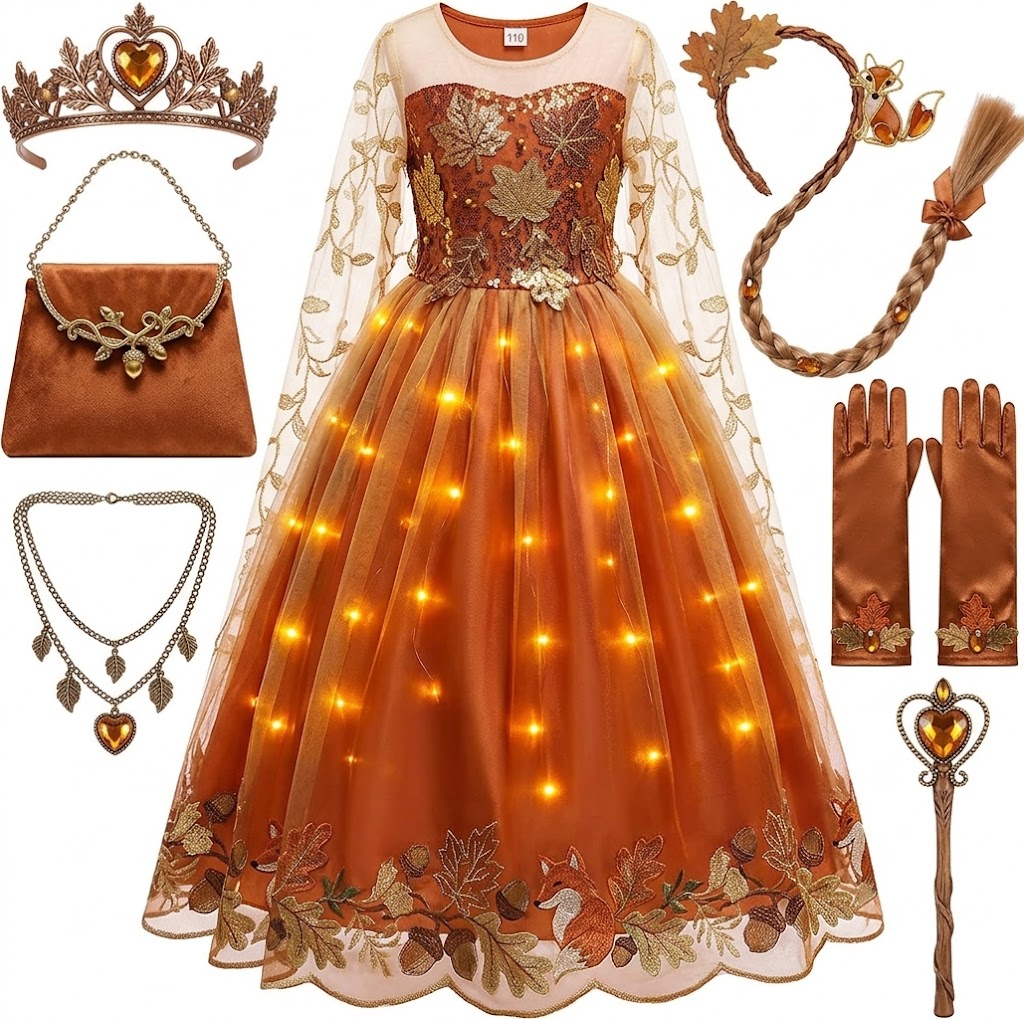
Princess Dresses for Girls Light Up Princess Costume for Christmas Halloween Toddler Princess Dress Up Clothes
Check Price on AmazonThe films also include references to Sámi culture, the culture of an Indigenous people whose communities span parts of northern Norway, Sweden, Finland, and Russia. Frozen II features the Northuldra, a fictional community, and includes cultural elements developed with Sámi input. The Northuldra are not a direct portrayal of all Sámi people or communities.
Where the two films go
The first film centers on Arendelle and the surrounding mountains. Frozen II begins in the same kingdom, then sends Anna, Elsa, Kristoff, Olaf, and Sven beyond its familiar borders. Its new locations are part of the same fictional world, not real-world destinations.
| Place | Appears in | What it is | Best way to understand it |
|---|---|---|---|
| Arendelle | Frozen and Frozen II | The fictional kingdom where Anna and Elsa live | The story’s Norwegian-inspired home base |
| The Enchanted Forest | Frozen II | A magical forest beyond Arendelle | A fantasy setting tied to the kingdom’s past |
| The Northuldra homeland | Frozen II | The forest home of the Northuldra people | A fictional community and setting with Sámi cultural input |
| Ahtohallan | Frozen II | A mysterious, glacier-like place connected to Elsa’s journey | A magical location, not a real glacier or mapped site |
| Norway | Real world | A country that inspired aspects of the films | A place to visit for related scenery and architecture, not Arendelle |
The Enchanted Forest and Northuldra
The Enchanted Forest is a major setting in the sequel. It lies beyond Arendelle and is surrounded by a magical mist. Within it, the characters encounter elemental forces and the Northuldra, whose homeland is connected to the conflict at the heart of the story.
The forest is fictional, but its Nordic setting and the film’s cultural references connect it to the broader inspiration behind the series. The Northuldra have their own identity within the story. It is more accurate to describe them as a fictional people influenced by Sámi culture than to call them a direct stand-in for every Sámi community.
Ahtohallan
Ahtohallan is a mysterious, ice-filled place Elsa seeks in Frozen II. The film presents it as a source of memories and knowledge, not as an ordinary geographic location. Its glacier-like appearance fits the story’s northern atmosphere, but there is no real-world destination by that name that corresponds to the film’s magical site.
Viewers sometimes assume every new setting in the sequel must be a place in Norway because the first film has Norwegian influences. The films do not establish that. Ahtohallan and the Enchanted Forest belong to the fantasy world, even when their visual design draws on Nordic scenery.
Real places that inspired the films
Norway is the clearest real-world source for the films’ visual style. Viewers often point to Norwegian fjords, mountain scenery, wooden churches, and historic towns when discussing the inspiration. Those comparisons can help explain why Arendelle feels familiar, but they do not make any one location the kingdom’s official real-world counterpart.
Bergen is often mentioned because its coastal setting and historic wooden architecture suit the film’s general look. Norwegian fjord regions also offer views that can call the films to mind. These are useful visual parallels, not confirmed stand-ins for every place shown on screen.
If you want a real-world trip with a similar atmosphere, look for Norwegian destinations that combine coastal scenery, mountains, and historic architecture. Treat the trip as an exploration of the film’s inspirations, not a visit to an exact movie location. Arendelle’s streets and buildings were created for animation.
Is Arendelle a real place you can visit?
No. Arendelle is fictional. There is no actual kingdom, city, or village with the same official role in the story. You can visit places in Norway that share some of its visual qualities, but there is no single real location that reproduces the kingdom.
It also helps to separate a film’s setting from its production location. Frozen and Frozen II are animated films, so their settings were created by artists rather than filmed on location in Arendelle. Norway inspired elements of the design; it was not the physical set where the kingdom was filmed.
That is different from a live-action film that uses an actual castle, town, or landscape as a set. With an animated story, a real-world visit usually means seeing an inspiration or a themed attraction, not standing in the precise place where a scene was shot.
What about Frozen at Disney parks?
Disney parks offer attractions themed around the characters and stories, but those are not the same thing as visiting the story’s real setting. At EPCOT in Walt Disney World, Frozen Ever After is located in the Norway pavilion. The attraction’s setting and nearby themed area draw on the films’ Norwegian look and the pavilion’s Norway theme.
That park connection can make the distinction confusing. The pavilion is a themed area at a real park, and the attraction brings guests into a version of the story. Neither one makes Arendelle a real Norwegian town.
Attractions and offerings can change over time. If a particular ride, event, or park location matters to your plans, check the park’s current official information before you go.
Common mix-ups about the setting
- “Arendelle is in Norway.” It is not. It is a fictional kingdom influenced by Norwegian settings and culture.
- “The films were shot in Norway.” They are animated, so their locations were created for the films. Norway provided inspiration, not a live-action filming location.
- “A real Norwegian town is the official Arendelle.” No single town is established as its exact counterpart. Similarities in architecture or scenery are comparisons.
- “The Northuldra are simply the Sámi.” They are fictional characters and a fictional community. The film includes Sámi cultural input, but the Northuldra should not be treated as a complete representation of Sámi people.
- “Every location in the sequel is a real Nordic place.” The Enchanted Forest and Ahtohallan are fictional story settings, even though their design fits the films’ northern atmosphere.
How to explain the setting in one sentence
If someone asks where the story happens, the clearest answer is: the films take place in the fictional kingdom of Arendelle, a place inspired by Norway. For the sequel, add that the characters also travel into the Enchanted Forest and to Ahtohallan.
That wording answers the question without confusing inspiration with geography. It also leaves room to explain that Norway is real and worth exploring, while Arendelle is part of the films’ fantasy world.
where does frozen disney take place? The main answer is Arendelle, a fictional kingdom shaped by Norwegian scenery and cultural references. The sequel adds magical locations, including the Enchanted Forest and Ahtohallan.
For a real-world trip with a similar feel, explore Norway’s coastal scenery, fjords, and historic architecture. Think of those places as inspirations rather than exact locations from the animated films.