why is frozen not a disney princess? Explained
why is frozen not a disney princess? Frozen is a Disney movie, and Anna and Elsa are Disney princess characters, but they are not part of the separate Disney Princess brand lineup. Disney treats Frozen as its own major franchise, with its own identity and merchandise.
The confusion makes sense: Anna and Elsa are royalty, and their story shares familiar features with classic princess films. The key difference is that “Disney princess” can mean either a character type or a specific Disney consumer brand. Here’s how those meanings differ, what the films establish about the sisters, and why the distinction doesn’t make them any less Disney.
why is frozen not a disney princess? The short answer
Frozen is a Walt Disney Animation Studios film, and Anna and Elsa are Disney princess characters in the ordinary sense. But they are generally not included in the official Disney Princess franchise lineup. That lineup is a curated brand featuring selected characters from Disney films; it is not a complete list of every Disney heroine who is royal, brave, or associated with a fairy tale.
Disney presents Frozen as a distinct franchise, with its own characters, stories, merchandise, and branding. So the clearest answer is that Frozen is Disney, but it is marketed separately from the Disney Princess brand. The wording can sound contradictory until you separate a movie studio’s characters from one particular product franchise.
There is no publicly established rule saying that every Disney princess must be included in the Disney Princess lineup. Disney has not provided a definitive, detailed explanation for every character’s inclusion or exclusion. The separate branding is clear; the precise business reasoning behind each decision should be treated as an informed explanation, not a confirmed statement from Disney.
“Disney princess” can mean two different things
People use the phrase in at least two ways. In casual conversation, it can describe a princess character from a Disney story. In retail, marketing, and franchise materials, it often means a character included in Disney’s particular Disney Princess brand. Those definitions overlap, but they are not identical.
Under the broad, everyday meaning, Anna and Elsa are Disney princess characters. They come from a Disney animated film and are members of the royal family of Arendelle. Under the narrower brand meaning, they are commonly handled separately from the Disney Princess lineup, alongside other Disney properties with their own branding.
This distinction applies beyond Frozen. Disney has many films with royal characters, heroines, and fairy-tale plots, but not every one becomes part of the Disney Princess product line. Appearing in a Disney movie does not automatically make a character a member of every Disney franchise.
A useful comparison
| Meaning | What it describes | How Anna and Elsa fit | Best way to use it |
|---|---|---|---|
| Disney princess character | A Disney character who is a princess or is commonly associated with princess stories | Both are Disney royal characters; Anna is a princess in the first film | Casual conversation about the characters or movie |
| Disney Princess brand | A specific Disney franchise and curated character lineup | Generally marketed separately as part of Frozen | Discussing branded toys, products, or official franchise groupings |
| Disney heroine | A broad description for a central female character in a Disney story | Both sisters are central heroines | Talking about story roles without making a claim about brand membership |
The table helps avoid a common mix-up: the label can describe a character in a general sense or refer to a specific branded group. If a person calls Elsa a Disney princess, they may be using the first meaning. If a product list leaves her off the Disney Princess lineup, it is using the second.
Anna and Elsa’s royal titles are part of the confusion
Both sisters have royal status, but their titles change across the films. In the first Frozen, Elsa is queen of Arendelle, while Anna is a princess. At the end of Frozen II, Anna becomes queen of Arendelle, and Elsa takes a different role connected to the Enchanted Forest and her identity as the Fifth Spirit.
That story progression means neither sister’s current title neatly explains the brand distinction. Elsa’s exclusion cannot simply be explained by saying she is a queen, because Disney’s princess stories and products do not follow one universal title rule. Anna’s later position as queen does not automatically move her into or out of a particular merchandise lineup either.
In other words, royal rank is not the same thing as brand membership. A character’s title matters to the story, while a franchise lineup is a separate marketing decision. Treating those as the same rule creates explanations that sound tidy but are not supported by a clear, universal Disney policy.
Why Frozen has its own franchise identity
Frozen became a prominent Disney property with a recognizable world and characters of its own. Its films, songs, settings, and stories are promoted under the Frozen name. Keeping that identity distinct lets Disney present the sisters as part of one continuing story rather than only as members of a wider princess group.
That is a practical explanation for the separate branding, though it should not be confused with a formal statement that Disney has shared as the sole reason. Large entertainment companies often organize characters through overlapping properties. A character can belong to a movie franchise, appear in broader Disney promotions, and still be treated separately from another product line.
Frozen also has a story that does not fit only one princess-film pattern. Its central relationship is between two sisters. The plot focuses on family, responsibility, fear, and Elsa’s powers, rather than centering only on a princess seeking romance or a future royal title. Those differences help give the film its own identity, even though its characters also fit some familiar princess-story conventions.
None of this means the film is outside Disney. It was made by Disney, and its characters are Disney characters. Separate branding is a way to organize a large collection of stories, not a judgment about the film’s status or importance.
What makes a character part of the Disney Princess lineup?
There is no simple public checklist that guarantees entry. Being a princess in the plot is not enough on its own, and having a film made by Disney is not enough either. The lineup is a curated brand, so its membership reflects franchise and marketing choices as well as story details.
Disney Princess has commonly featured characters such as Snow White, Cinderella, Ariel, Belle, Jasmine, Pocahontas, Mulan, Tiana, Rapunzel, and Moana. The exact presentation of a lineup can vary across products, regions, and time. That is another reason not to treat every store display or web page as a fixed legal definition of who counts as a Disney princess in everyday speech.
Some characters also appear in Disney promotions or products outside the central Princess brand. That does not automatically make them official members of the lineup. The distinction resembles a bookstore placing a novel in a fantasy section while also promoting it as part of a particular series: a broad category and a named collection can overlap without being identical.
Why a checklist can mislead
- Royal title: A character may be royalty without belonging to the brand.
- Film studio: A Disney film character is not automatically part of every Disney character franchise.
- Merchandise appearance: A princess-themed product does not necessarily confirm official lineup membership.
- Character popularity: Popularity can support a character’s own franchise identity rather than guarantee placement in another one.
Use the exact brand name when discussing an official product or lineup. Use “Disney princess character” when you mean the broader story description. That small wording change usually resolves the disagreement.
Are Anna and Elsa Disney princesses?
Yes, in the broad and familiar sense. They are Disney characters from a story about a royal family, and Anna is explicitly a princess in the first film. Elsa is a queen in that film. People often call both Disney princesses because they belong to the same royal-centered story and are associated with princess culture.
Not necessarily, if you mean the official Disney Princess brand lineup. In that narrower context, Anna and Elsa are generally presented under Frozen instead. This answer may seem like a contradiction, but it is simply a difference between a descriptive label and a named franchise.
If someone asks whether Elsa is “a Disney princess,” it helps to ask what they mean. If they mean a Disney royal heroine, the answer is yes in ordinary usage. If they mean a member of the specific Disney Princess brand, the more accurate answer is that Elsa is usually marketed as a Frozen character, not as part of that lineup.
Common explanations that miss the point
“Elsa is a queen, so she cannot be a princess”
This is too simple. Elsa is queen during the first film, but the Disney Princess brand is not governed by a universal rule that excludes every queen. Characters’ titles also change over time, as Anna’s does. A changing title does not explain the brand’s full membership policy.
“Frozen is not a Disney movie”
This is incorrect. Frozen is a Disney animated film. The fact that it is marketed as a separate franchise from Disney Princess does not change who produced it or who owns the characters.
“The sisters are not included because they are not real princesses”
That also misses the distinction. Anna and Elsa are fictional royalty within the story. The question is not whether their status is real; it is whether Disney groups them under one particular brand.
“If a product shows a character with other princesses, that proves membership”
Not always. Disney can bring characters together for a special promotion, event, or product without changing their usual franchise identity. A crossover appearance shows that the characters share a promotion; it does not, by itself, define the official lineup.
What people most often get wrong is treating “Disney princess” as one fixed category. It works as a general description and as a specific brand name, and those uses produce different answers. Keep the context in view before deciding that one answer must be wrong.
How to explain the difference clearly
If you are answering a child, settling a casual debate, or labeling a collection, a short explanation is enough. Say that Anna and Elsa are Disney princess characters in the broad sense, but Frozen is usually sold and promoted as its own franchise rather than as part of the Disney Princess brand.
- Identify the context. Are you talking about the story, a character’s title, or a branded product lineup?
- Use the right label. Say “Disney royal character” or “Disney princess character” for the broad meaning; use “Disney Princess brand” for the specific franchise.
- Allow for changing details. The sisters’ titles and roles develop across the films, so describe the film or point in the story you mean.
- Avoid claiming a confirmed corporate reason. The separate Frozen branding is evident, but Disney has not provided a definitive public explanation covering every choice.
This wording is especially useful for shopping. A toy or dress can feature Anna or Elsa without being labeled as part of the Disney Princess collection. Check the product’s own branding rather than assuming the character’s story title determines the category.
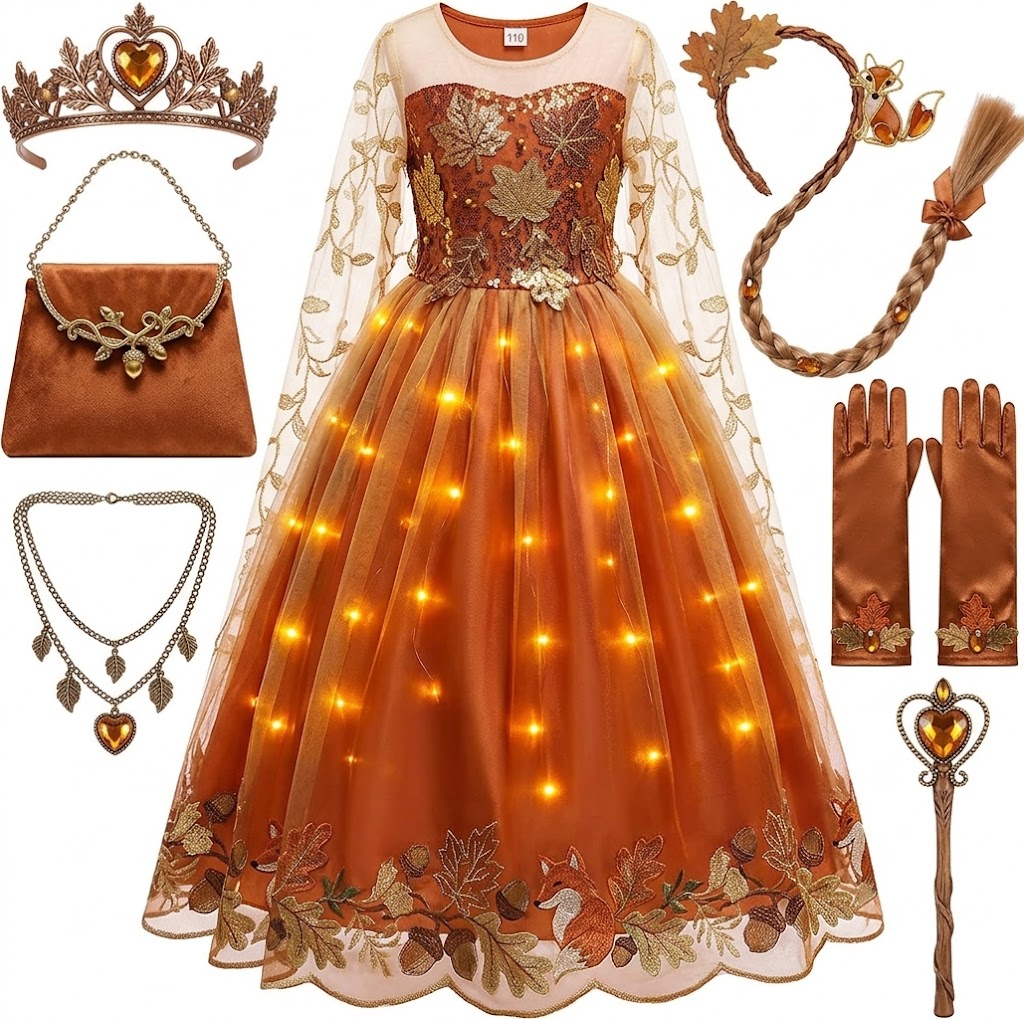
Princess Dresses for Girls Light Up Princess Costume for Christmas Halloween Toddler Princess Dress Up Clothes
Check Price on AmazonWhy the distinction does not diminish Frozen
Being outside a particular lineup does not make Anna or Elsa less important, less iconic, or less connected to Disney. It only describes how the company groups and markets its properties. Frozen has a distinct name and story world, which gives the sisters room to headline their own films and merchandise.
The separate identity can also make the sisters easier to recognize as a pair. The films are built around their relationship, and their story continues beyond a single royal transformation. A broader princess collection may group characters from many unrelated stories, while Frozen promotions can focus on Arendelle, the sisters, and the people around them.
So the useful answer is not that Frozen “isn’t Disney” or that Anna and Elsa “don’t count.” It is that Disney ownership, a character’s royal role, and membership in the Disney Princess brand are three different things. Once those categories are separated, the apparent contradiction disappears.
why is frozen not a disney princess? The clearest answer is that Frozen is a Disney franchise of its own, while the Disney Princess brand is a separate, curated lineup. Anna and Elsa can still be called Disney princess characters in the broader, everyday sense.
For a debate or product search, first decide whether you mean royal characters or the branded lineup. Then describe Anna and Elsa as Frozen characters unless you are using “Disney princess” casually.