is disney frozen norwegian? Norway’s role explained
Yes, Disney’s Frozen draws heavily on Norwegian scenery, architecture, and visual traditions, but its kingdom, Arendelle, is fictional. The movie is not a documentary about Norway or a direct retelling of a Norwegian folktale.
That distinction helps explain why the film feels Norwegian without matching a real place. Here’s how Norway influenced the setting, what the movies borrow from Scandinavian culture, and how the Sámi connection in Frozen II differs from the first film’s inspiration.
is disney frozen norwegian? The short answer
Frozen is Norwegian-inspired, not set in a real Norwegian town. Disney created Arendelle as a fictional kingdom, using Norwegian and broader Scandinavian references to shape its buildings, clothing, landscapes, and atmosphere.
The original film also draws loosely from The Snow Queen, a fairy tale by Danish author Hans Christian Andersen. That story is a source of inspiration, not a script the movie follows closely. The characters, plot, and kingdom in Disney’s version are substantially reworked.
So the most accurate description is this: Frozen combines an original fantasy story with visual inspiration from Norway and other northern European traditions. It is not an account of Norwegian history, and Arendelle does not appear on a map of Norway.
What parts of Frozen are inspired by Norway?
Norway is especially visible in the film’s architecture and natural scenery. Disney’s artists researched Norwegian settings and design traditions while developing the look of Arendelle. The result brings together recognizable references rather than reproducing one town or building exactly.
Fjords, mountains, and northern scenery
Arendelle’s steep mountains, water, and deep inlets evoke Norway’s famous fjord country. A fjord is a long, narrow sea inlet bordered by steep land, often formed by glaciers. The film’s dramatic peaks and waterfront setting make the kingdom feel like a northern coastal place.
These features are visual shorthand, not a precise map. Norway has many different regions, and the film compresses mountains, forests, villages, and waterways into a storybook setting. Its fictional geography changes to serve the plot.
Stave church details and wooden architecture
Arendelle’s castle and buildings include design cues associated with historic Norwegian wooden architecture. One important reference is the stave church, a medieval church built with a timber framework and upright wooden posts, or staves. The movie’s architecture uses decorative woodwork and layered roofs that recall this tradition.
That does not mean the castle is a real stave church or a faithful copy of one. Churches and royal residences serve different purposes, and the film combines decorative features for a fantasy look. Seeing the influence is more accurate than calling the animated castle a replica.
Rosemaling and decorative patterns
Some of the film’s ornamentation recalls rosemaling, a Norwegian decorative painting tradition known for flowing floral shapes and curved designs. Similar patterns appear in regional crafts, interiors, and folk art. In Frozen, motifs help tie clothing and buildings to a shared visual style.
The film adapts these references rather than presenting a museum-level record of Norwegian art. Its patterns are designed to be legible and consistent across animation, costumes, and sets.
Clothing and traditional dress references
Anna’s clothing includes details inspired by Norwegian folk dress, particularly the bunad, a type of traditional outfit worn in Norway for celebrations and other formal occasions. Embroidery, fitted bodices, aprons, and decorative trim create a connection to Norwegian dress styles.
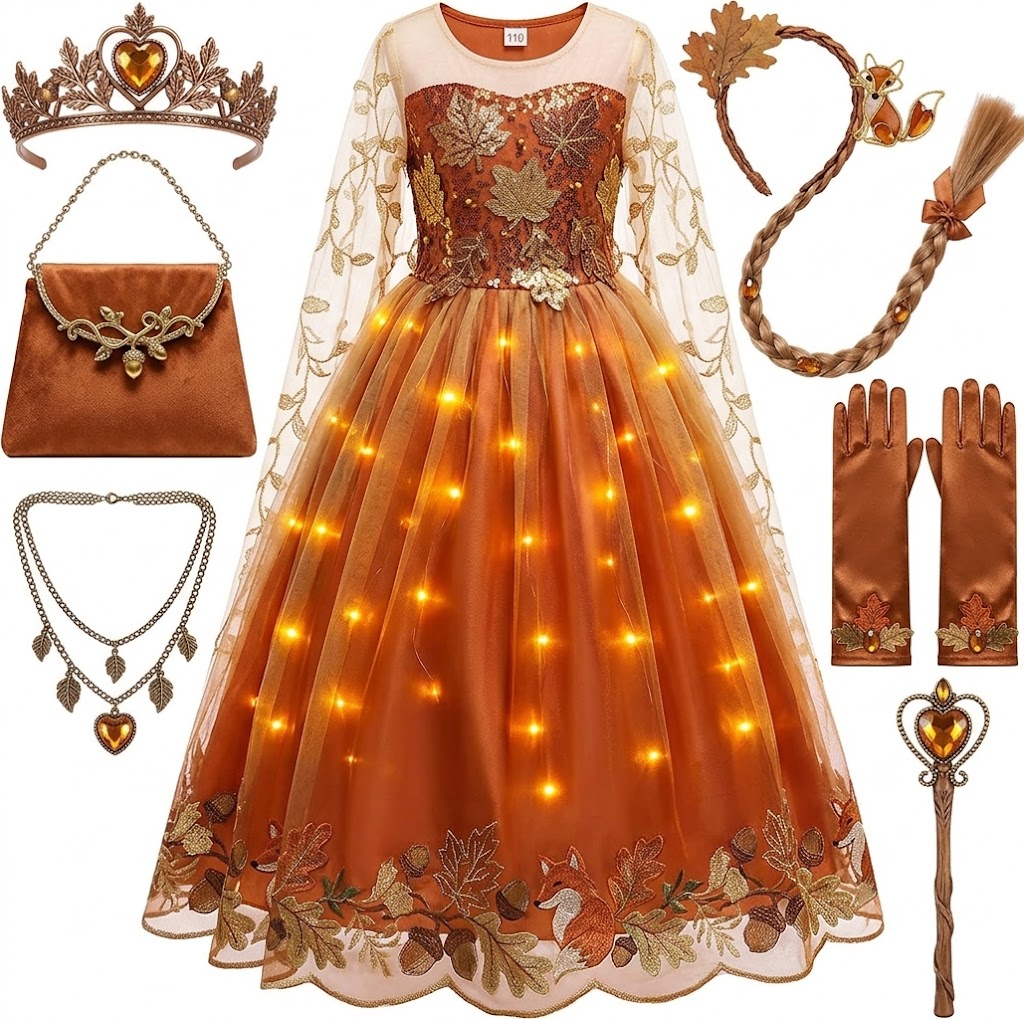
Princess Dresses for Girls Light Up Princess Costume for Christmas Halloween Toddler Princess Dress Up Clothes
Check Price on AmazonA bunad is not one universal costume. Styles vary by region, and particular designs can carry local meaning. Anna’s clothes are fantasy costumes informed by folk dress, not an exact bunad from a specific Norwegian community.
What is fictional, and what is genuinely Norwegian?
A useful way to read the film is to separate its real-world references from its invented story elements. The inspiration can be Norwegian even when the names, characters, and plot are made up.
| Film element | Connection to Norway | What to keep in mind |
|---|---|---|
| Arendelle | Its scenery and architecture evoke Norway. | It is a fictional kingdom, not a Norwegian town. |
| Fjords and mountains | They resemble features found in Norway. | The film combines scenery into an invented setting. |
| Wooden buildings | Some decorative details recall Norwegian timber architecture and stave churches. | The structures are animated designs, not exact historical copies. |
| Anna’s clothing | Some details draw on Norwegian folk dress. | Her outfits are fantasy adaptations, not a precise regional bunad. |
| Story premise | The film has a loose connection to Andersen’s The Snow Queen. | Andersen was Danish, and Disney substantially changed the story. |
| Elsa’s magic | Snow and ice suit the film’s northern setting. | Her powers are fantasy, not a representation of Norwegian belief or history. |
This distinction clears up a common misconception: a movie can borrow a country’s visual language without being set there. You can recognize Norwegian influences while treating Arendelle and its royal family as fictional creations.
Is Frozen based on a Norwegian fairy tale?
Not directly. Frozen is loosely inspired by The Snow Queen, a fairy tale published by Danish writer Hans Christian Andersen in 1844. Andersen’s story follows a boy and girl, Kai and Gerda, and includes a powerful Snow Queen. Disney kept the broad snow-and-ice connection but changed the plot, character relationships, and ending.
Because Andersen was Danish, calling the source story Norwegian is inaccurate. Denmark and Norway share parts of a wider Scandinavian cultural and literary history, but they are separate countries with distinct traditions. A Danish author’s tale does not become Norwegian simply because a later adaptation uses Norwegian visual references.
It is also misleading to describe the film as a close adaptation. Elsa and Anna’s sister relationship, Elsa’s ice powers, and the story’s central conflicts are key parts of Disney’s version. Andersen’s tale can help explain the film’s literary starting point, but it does not explain every character or event.
How is Frozen II connected to Sámi culture?
Frozen II expands the films’ cultural references by introducing the Northuldra, a fictional people whose way of life draws on Sámi culture. The Sámi are an Indigenous people with communities across parts of northern Norway, Sweden, Finland, and Russia. Their homelands and cultures are not limited to one modern national border.
Moonlite Disney Frozen 3-Story Bundle (Projector Sold
Check Price on AmazonThe Northuldra are not the Sámi themselves. They are fictional characters shaped by cultural references, so it is important not to treat the film as a full account of Sámi life or history. The movie’s forest setting, traditional clothing influences, and reindeer herding references create points of connection, but they do not represent every Sámi community or experience.
Disney worked with Sámi representatives and cultural advisers during the development of Frozen II to guide its portrayal of the Northuldra. This consultation matters because Indigenous cultures are living communities, not simply a source of costume or story ideas. It also makes the sequel’s cultural relationship different from the first film’s broad visual inspiration from Norway.
A further distinction is useful: Sámi people are not interchangeable with Vikings or with a general category of “northern” Europeans. Sámi cultures have their own languages, histories, and traditions. The film’s references should be understood in that specific context rather than folded into a generic Scandinavian identity.
Is Arendelle a real place in Norway?
No. Arendelle is fictional. Its name and design help create a believable story setting, but there is no real Norwegian kingdom or town in the film’s world that corresponds directly to it.
Some viewers connect Arendelle to real Norwegian towns because of its waterfront, mountains, and wooden buildings. Those similarities are understandable, but a visual resemblance does not establish that one specific town was the model. The film combines several kinds of Norwegian references into a made-up place.
If you want to see real places that feel like the movie, look for Norwegian fjord scenery, historic wooden architecture, and regional folk-art traditions. Treat those as real-world parallels, not as locations where the animated events happened. The film’s setting remains a blend of references rather than a travel guide to one exact spot.
Does the movie use Norwegian language?
The original English-language film is primarily in English, not Norwegian. Like many major animated films, Frozen has been released in dubbed versions for different markets, including Norwegian-language versions. A dub changes the spoken language for that release; it does not change the movie’s original setting or make the story a record of Norwegian life.
Norwegian itself has two written standards, Bokmål and Nynorsk, alongside spoken varieties and regional dialects. A Norwegian dub is a localized version intended for its audience, rather than proof that every character in the story speaks one real-world Norwegian dialect.
Why does Frozen feel Norwegian to viewers?
The film combines several consistent visual cues. Fjord-like water, steep mountains, wooden buildings, folk-inspired ornament, and northern weather all point toward Norway. When these details appear together, they make Arendelle feel culturally and geographically grounded even though it is invented.
Color and design also play a part. Warm wood and embroidered clothing contrast with Elsa’s icy palace and the snow-covered surroundings. That contrast supports the story while keeping the setting visually connected to a northern European atmosphere.
But a convincing atmosphere is not the same as a complete cultural portrait. The film selects details that work for animation and storytelling. It leaves out much of the variation among Norwegian regions, historical periods, and communities. That is why it is better to call the setting Norwegian-inspired than to say the film shows what Norway is like.
What the Norwegian connection does—and does not—mean
The Norwegian references are a source of visual design, not a claim that every part of the film belongs to Norwegian culture. Keeping that distinction clear helps avoid several common mix-ups.
- Norwegian inspiration does not make Arendelle real. It is a fictional kingdom shaped by recognizable design cues.
- A Danish fairy tale is not a Norwegian folk tale. Andersen was Danish, and Disney’s adaptation changes his story extensively.
- Scandinavian does not mean identical. Norway, Denmark, and Sweden have related histories but distinct cultures and languages.
- Sámi culture is not a costume theme. The Sámi are Indigenous people with living communities, and the Northuldra remain fictional.
- A dubbed version does not change the original story’s setting. It simply presents the dialogue in another language.
These points are especially useful if you are discussing the movie with children or using it as a starting point for learning about Norway. The film can prompt curiosity, but it should not be treated as a substitute for accurate information about Norwegian or Sámi communities.
How to explore the real inspirations thoughtfully
If the film has sparked an interest in Norway, follow the specific reference that caught your attention. Looking up fjords, stave churches, rosemaling, or regional bunads gives you a clearer picture than searching for “the real Arendelle,” which does not exist.
- Choose one element from the film. For example, focus on the wooden architecture rather than treating the whole setting as a single historical model.
- Check whether the reference is regional. Norwegian crafts and clothing vary by place, so avoid assuming one image represents the whole country.
- Separate fiction from history. Elsa’s magic and Arendelle’s royal story belong to fantasy; churches, folk art, and fjords have real-world contexts.
- Use Sámi-specific sources for Sámi topics. Learn from Sámi-led cultural resources rather than assuming a fictional character provides a complete account.
This approach keeps the fun of recognizing the movie’s influences while respecting the people and traditions behind them. It also helps avoid the mistake of treating a few attractive details as a full picture of a country or Indigenous culture.
is disney frozen norwegian? The clearest answer is that the films use Norwegian visual inspiration, while Arendelle and its story are fictional. The first movie also draws loosely on a Danish fairy tale, and Frozen II includes distinct, consulted references to Sámi culture.
For a practical next step, pick one detail that interested you—such as fjords, stave churches, rosemaling, or Sámi culture—and learn about its real-world context. That gives you a more accurate picture than searching for a real Arendelle.