what frozen yogurt does smoothie king use: the facts
There is no reliably published brand name for the frozen yogurt used by Smoothie King. The clearest answer is that some smoothie recipes list frozen yogurt as an ingredient, but the supplier and exact product may not be publicly identified.
That matters if you are trying to match a particular flavor, avoid an ingredient, or estimate nutrition. Here’s how to interpret the menu wording, check whether a drink contains yogurt, and ask a store for details without assuming every smoothie has the same base.
what frozen yogurt does smoothie king use
The brand and supplier are not clearly confirmed in public information. Smoothie King recipes may identify frozen yogurt as an ingredient, but that does not tell you the manufacturer, product name, recipe, or whether every location uses an identical supply item. Unless the company or a specific store confirms those details, naming a particular retail brand would be guesswork.
Frozen yogurt is not the same thing as a named flavor or a standard recipe across every drink. A smoothie that lists frozen yogurt may use it as one component alongside fruit, juice, milk, a protein blend, or other ingredients. Another smoothie may use a different base or no yogurt at all.
So, if you are asking which brand to buy to recreate a drink at home, there is no confirmed one-size-fits-all answer. A plain or vanilla frozen yogurt may be a reasonable substitute for taste and texture, but it should be treated as an approximation, not an official match.
Recipes, ingredient disclosures, and available items can change. Store supply and preparation can also vary, so the best way to get a current answer about one specific drink is to ask the location making it.
What “frozen yogurt” means on a smoothie ingredient list
Frozen yogurt is a chilled, spoonable dairy product made with yogurt ingredients and frozen into a soft or firm texture. In a smoothie, it can add creaminess, sweetness, and a mild tang. It may also make the finished drink thicker than a recipe made with juice and fruit alone.
The menu phrase does not necessarily mean the smoothie contains plain yogurt from a cup. Frozen yogurt products vary in sweetness, dairy content, flavoring, stabilizers, and live cultures. Those details depend on the specific product and its label, which may not be available from a menu description alone.
It is also easy to confuse frozen yogurt with other smoothie ingredients. Yogurt, frozen yogurt, sherbet, ice cream, and a yogurt-flavored powder are not interchangeable terms. They can differ in ingredients, texture, sweetness, and allergen information. A menu’s exact wording is more useful than guessing from how creamy or sweet a smoothie tastes.
Nor does the word “yogurt” automatically mean a product is low in sugar, high in protein, or probiotic-rich. Those claims depend on the product’s formulation and serving size. Check the current nutrition and ingredient information for the drink rather than inferring its nutrition from the ingredient name.
Which smoothies contain frozen yogurt?
There is no safe rule that every Smoothie King smoothie contains frozen yogurt. Recipes differ by drink, and menus or ingredient lists can be revised. Some options may include it, while others may rely on fruit, juice, milk, or other ingredients for body and flavor.
Look up the exact drink name on the current menu or nutrition materials, then read its ingredient details if they are available. Be specific: a smoothie’s name or description may mention a flavor without listing every ingredient. If you have an allergy, dietary restriction, or strong preference, confirm with the store before ordering.
When asking, use the full drink name and size if relevant. Ask whether frozen yogurt is in the current recipe, whether it can be left out, and what the store uses in its place. A substitution may change texture and flavor, and the team may not be able to make every modification.
Do not assume that a smoothie is dairy-free because its main flavor is fruit. A fruit-based drink can still include a dairy ingredient. The reverse is also true: a creamy texture does not prove that frozen yogurt was used, since fruit, ice, and other recipe components can create thickness.
How frozen yogurt compares with common smoothie bases
These ingredients can all make a smoothie creamy, but they are not the same product. The table offers a practical comparison for understanding menu wording or choosing a home substitute. It does not identify Smoothie King’s supplier or claim that any one option matches a specific store recipe.
| Ingredient or base | What it typically adds | What to check | Best for |
|---|---|---|---|
| Frozen yogurt | Creamy body, sweetness, and a mild tang | Dairy, added sweeteners, flavoring, and serving size | A tangy, dessert-like smoothie texture |
| Plain yogurt | Creaminess with a more noticeable yogurt flavor | Dairy, fat level, and whether it is sweetened | A homemade smoothie where you want to control sweetness |
| Greek yogurt | A thick texture and a concentrated yogurt taste | Dairy, added sugar, and the product’s nutrition label | A thick home blend; it may taste tangier than frozen yogurt |
| Milk or a milk alternative | Liquid body and a smoother pour | Dairy, soy, nuts, or other allergens in the chosen product | A drinkable blend without a frozen-yogurt-style tang |
| Fruit and ice | Coldness and thickness, depending on the fruit and proportions | Sweetness and the final consistency | A fruit-forward blend without adding yogurt as a base |
For the closest broad texture at home, start with vanilla frozen yogurt and adjust the amount gradually. For a less sweet or more tart result, plain yogurt can work, but it will not reproduce a sweetened frozen product exactly. The fruit, liquid, and blending method matter just as much as the base.
Does frozen yogurt mean the smoothie is dairy-free or vegan?
No. Frozen yogurt is generally a dairy product, so a smoothie containing it should not be assumed to be dairy-free or vegan. If you avoid dairy for an allergy, intolerance, ethical, or other reason, confirm the full ingredient list and preparation details for the specific drink.
Ask whether the smoothie includes frozen yogurt, milk, whey, or another dairy-derived ingredient, and whether a dairy-free substitution is available. Also ask about shared equipment or preparation surfaces if cross-contact is a concern. Cross-contact means an allergen can get into a food through shared tools or surfaces even when it is not an intended ingredient.
A “no yogurt” request may not address every source of dairy. Recipes can include other dairy ingredients, and menu options can change. For a serious allergy, explain the specific allergen and ask whether the store can safely prepare the drink; do not rely on a casual ingredient swap as a guarantee.

Framendino, 16 Pack Artificial Chicken Nuggets Fake Fried Food Models Props for Kitchen Decor
Check Price on AmazonPeople with lactose intolerance should also avoid assuming that frozen yogurt is lactose-free. Fermentation can affect lactose, but the amount varies by product. The ingredient label or a direct answer about the specific product is more dependable than the general category name.
Does frozen yogurt make a smoothie healthier?
Not automatically. The word “yogurt” can sound like a nutrition claim, but frozen yogurt products differ widely. A smoothie’s overall nutrition depends on its portion size and all of its ingredients, including fruit, juice, milk, sweeteners, and any add-ins.
To compare drinks, check the current nutrition information for the exact size and recipe. Look at calories, added sugars, protein, and any other nutrients that matter to you. A drink with fruit can still contain substantial sweetness, and a yogurt ingredient does not by itself establish how much protein or added sugar the whole smoothie contains.
If you want to reduce sweetness, ask whether the recipe can be adjusted and whether the change affects other ingredients. Do not assume that removing frozen yogurt will simply subtract its sweetness: the store may use another base, and the drink may become thinner or more tart. Ask what the modification changes rather than relying on the ingredient name alone.
If your goal is more protein, check the menu’s nutrition details for the finished drink and ask about available add-ins. Frozen yogurt is not a dependable substitute for a protein-focused ingredient. The amount of protein depends on the specific product and the rest of the recipe.
How to confirm the ingredients before you order
Use these steps when you need a current answer about a particular smoothie. They are especially helpful if you are comparing a menu item with a homemade version or managing a dietary restriction.
- Choose the exact drink. Write down its full menu name and size. A store can give a more useful answer about a specific recipe than about the menu in general.
- Check the current ingredient and nutrition information. Use the company’s current materials where available. Older menu pages, third-party listings, and past recipes may not reflect what is served now.
- Ask whether frozen yogurt is in that recipe today. If you are asking about a brand, supplier, or product label, ask that directly. Do not treat the phrase “frozen yogurt” as confirmation of a particular manufacturer.
- Ask what substitutions are possible. Find out whether the ingredient can be omitted and what the store would use instead. The result may have a different thickness, flavor, or nutrition profile.
- State any allergy clearly. Ask about all dairy ingredients and possible cross-contact, not just the frozen yogurt. If the staff cannot confirm a safe preparation, choose another option.
For a general taste question, a quick in-store conversation may be enough. For an allergy, a strict dietary need, or a request for a precise ingredient label, ask for verified product information. If the store cannot provide it, do not rely on a guess.
Can you recreate the texture at home?
Yes, you can make a similar style of smoothie at home, but a close flavor match requires the actual recipe and product. Since the supplier and exact formula are not confirmed, think of this as a starting point rather than a copycat guarantee.
- Pick a base. Use vanilla frozen yogurt for a sweet, creamy result, or plain yogurt for a tangier one. If dairy is unsuitable, choose a clearly labeled dairy-free product.
- Add fruit in small amounts. Use the fruit that best fits the flavor you want. Frozen fruit usually adds body without needing as much ice, while fresh fruit can make a looser blend.
- Add liquid gradually. Start with a small pour of milk, juice, or a suitable alternative. A little liquid helps the blender move, but too much can make the smoothie thin.
- Blend and adjust. Blend until smooth, then add more fruit or frozen yogurt to thicken it, or more liquid to loosen it. Taste before adding sweetener because frozen yogurt and ripe fruit may already be sweet enough.
Change one ingredient at a time. That makes it easier to learn whether the flavor or texture came from the yogurt, fruit, or liquid. If you use Greek yogurt, expect a thicker and often tangier result than a sweetened frozen yogurt blend.
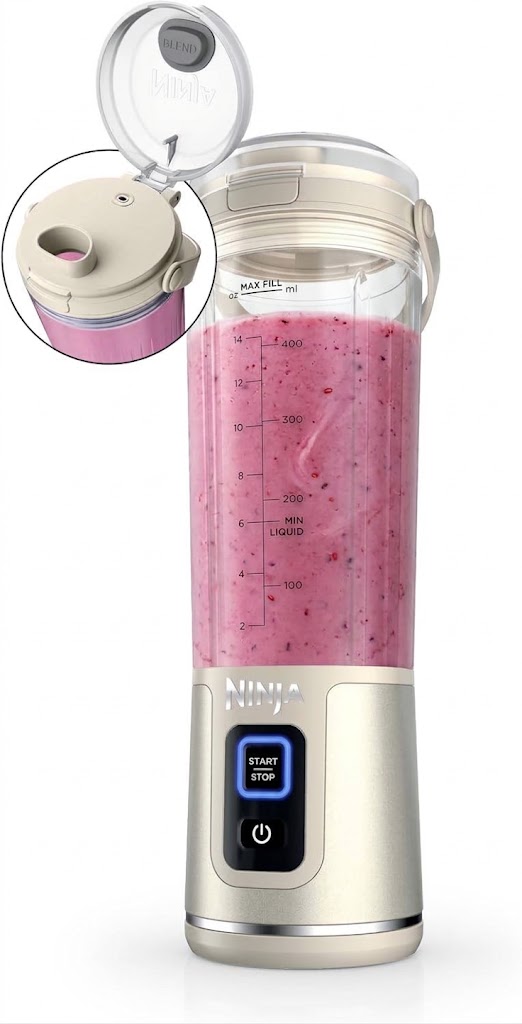
Ninja Blast Portable Blender, Cordless,18oz Vessel, Vanilla Bean
Check Price on AmazonCommon assumptions that lead to the wrong answer
Assumption: there is one frozen-yogurt product in every smoothie. Recipes vary. Ingredient information for one drink does not establish what another drink contains.
Assumption: a menu mention reveals the brand. It does not. “Frozen yogurt” describes an ingredient category, not a manufacturer or trade name.
Assumption: creamy means frozen yogurt. Smooth texture alone is not proof. Several ingredients and blending choices can produce a creamy drink.
Assumption: frozen yogurt is automatically low in sugar or high in protein. Those qualities depend on the actual product and serving. Check the finished smoothie’s current nutrition details rather than using a general impression.
Assumption: a dairy-free substitution makes the entire drink safe for an allergy. Other ingredients and cross-contact may still matter. Confirm the complete preparation with the store when safety is at stake.
The most useful takeaway is simple: distinguish what the menu names from what it does not disclose. The listed ingredient can tell you frozen yogurt is part of a recipe, but it cannot reliably tell you the supplier, exact formula, or whether that ingredient appears in every smoothie.
The most accurate answer to what frozen yogurt does smoothie king use is that some recipes list frozen yogurt, but a specific supplier or product brand is not reliably confirmed in public information. Do not assume every smoothie contains it or that a menu ingredient identifies a particular product.
Before ordering, check the current information for the exact drink and ask the store about its recipe, substitutions, and allergen handling. For a home version, start with vanilla frozen yogurt as a texture substitute, not as a guaranteed brand match.
