where does disney frozen take place: Arendelle
where does disney frozen take place? The first film is set in Arendelle, a fictional kingdom inspired by Norway. Its castle, fjord, mountains, and snowy village create a Scandinavian setting, but Arendelle is not a real place you can visit.
The story also moves beyond the kingdom, from the North Mountain to the forest and glacier surrounding it. The sequel, Frozen II, explores nearby regions and the older history behind Arendelle’s relationship with the Northuldra people. Here’s how the films’ locations fit together, what inspired them, and what to expect if you want to see similar scenery in real life.
where does disney frozen take place? The short answer
Frozen takes place mainly in Arendelle, an imaginary kingdom with strong Norwegian and broader Scandinavian influences. The kingdom is ruled by Elsa and Anna’s family. Its best-known features include a coastal village, a deep fjord, a royal castle, forested slopes, and high, snowy mountains.
Arendelle is a fictional setting rather than a disguised name for one specific Norwegian town. The filmmakers drew on Norwegian buildings, clothing, landscapes, and traditions, then combined those references into a setting suited to the story. That means you can recognize real cultural influences without finding a one-to-one match on a map.
The first movie’s central events unfold in and around Arendelle. A crucial part of the plot takes place at Elsa’s ice palace on the North Mountain. Frozen II begins in Arendelle but travels farther away, into an enchanted forest and to the mysterious glacier called Ahtohallan.
What is Arendelle like in the first Frozen movie?
Arendelle is a small, independent kingdom portrayed as a northern coastal community. Ships can enter its harbor through a fjord, while steep mountains and wooded terrain rise around the town. The combination gives the kingdom both a sheltered, village-like feel and a dramatic mountain backdrop.
At the center is the royal castle, where Elsa and Anna grow up. It overlooks the town and harbor, making the royal family visible in daily life. The castle’s Scandinavian-inspired design, including timber details and decorative patterns, helps connect the fictional palace to Norwegian architecture.
Much of the first movie takes place during Elsa’s coronation and the events that follow it. After Elsa’s powers are revealed, winter spreads across the kingdom. The town’s streets, harbor, and surrounding countryside become covered in snow and ice, turning familiar places into obstacles for Anna and the people of Arendelle.
The main locations in the first film
- Arendelle Castle: The royal home and the setting for the coronation, family memories, and key conversations between the sisters.
- Arendelle village and harbor: The busy center of the kingdom, with homes and shops close to the water.
- The fjord: A narrow inlet that links the town to the sea and frames several important arrivals and departures.
- The mountain trails: The rugged routes Anna travels while searching for Elsa.
- Elsa’s ice palace: A magical structure she creates high on the North Mountain after leaving the kingdom.
- The surrounding forest and wilderness: Snowy outdoor settings where Anna meets Kristoff, Sven, and Olaf.
The film does not present these places as a precise, consistent geographical map. Their distances and connections serve the story, so a journey that feels quick in one scene may not translate into a realistic travel route. Think of the locations as parts of a storybook kingdom, not as a navigable atlas.
Where does Frozen II take place?
Frozen II returns to Arendelle, then broadens the setting. Elsa, Anna, Kristoff, Sven, and Olaf travel to an enchanted forest beyond the kingdom. There, they encounter the Northuldra people and learn more about the history linking the forest, the spirits, and Arendelle’s past.
The forest is separated from the outside world by a magical mist. Within it, the characters encounter four elemental spirits associated with fire, water, earth, and air. These elements shape the atmosphere and challenges of the journey. The forest is not simply another stretch of Arendelle’s town or a second kingdom; it is a distinct, enchanted region central to the sequel’s conflict.
The journey eventually leads Elsa to Ahtohallan, a glacier connected to memory and the past. It is a major location in the film, but it is not shown as a real-world glacier with a stated address. The name and the place belong to the story’s mythology.
The sequel’s setting is therefore larger than the first movie’s. Arendelle remains the sisters’ home, while the forest and Ahtohallan reveal a wider world and long-hidden parts of the kingdom’s history. The movie uses these locations to explore family, responsibility, and the consequences of past decisions.
Arendelle and the other Frozen locations at a glance
| Place | Appears in | What it is | Best understood as |
|---|---|---|---|
| Arendelle | Frozen and Frozen II | A fictional coastal kingdom and the sisters’ home | The main setting |
| North Mountain | Frozen | A mountain region where Elsa builds her ice palace | A dramatic wilderness location near Arendelle |
| Enchanted Forest | Frozen II | A mist-covered forest inhabited by elemental spirits and the Northuldra | A separate magical region beyond the kingdom |
| Ahtohallan | Frozen II | A remote glacier tied to memories and the past | A mythic destination, not a mapped tourist site |
This comparison also clears up a common mix-up: not every snowy location in the movies is part of Arendelle itself. The ice palace is in the mountains, while the enchanted forest and Ahtohallan belong to the sequel’s wider journey.
Is Arendelle based on a real place in Norway?
Arendelle is not an actual Norwegian town. It is a fictional kingdom created from a mix of visual and cultural references. Norway is the clearest real-world inspiration, especially in the architecture, clothing, fjord setting, and mountain scenery.
Norway’s traditional wooden buildings and stave churches helped inform the films’ architectural look. A stave church is a medieval wooden church built with upright timber posts. The films also use decorative patterns associated with Nordic art and design, including motifs that suggest the region’s craft traditions.
The clothing offers another clue. The characters’ formal outfits include shapes, embroidery, and colors that evoke traditional Norwegian dress. Elsa and Anna’s costumes are fantasy designs rather than exact historical replicas, but their visual details help establish the setting’s cultural influence.
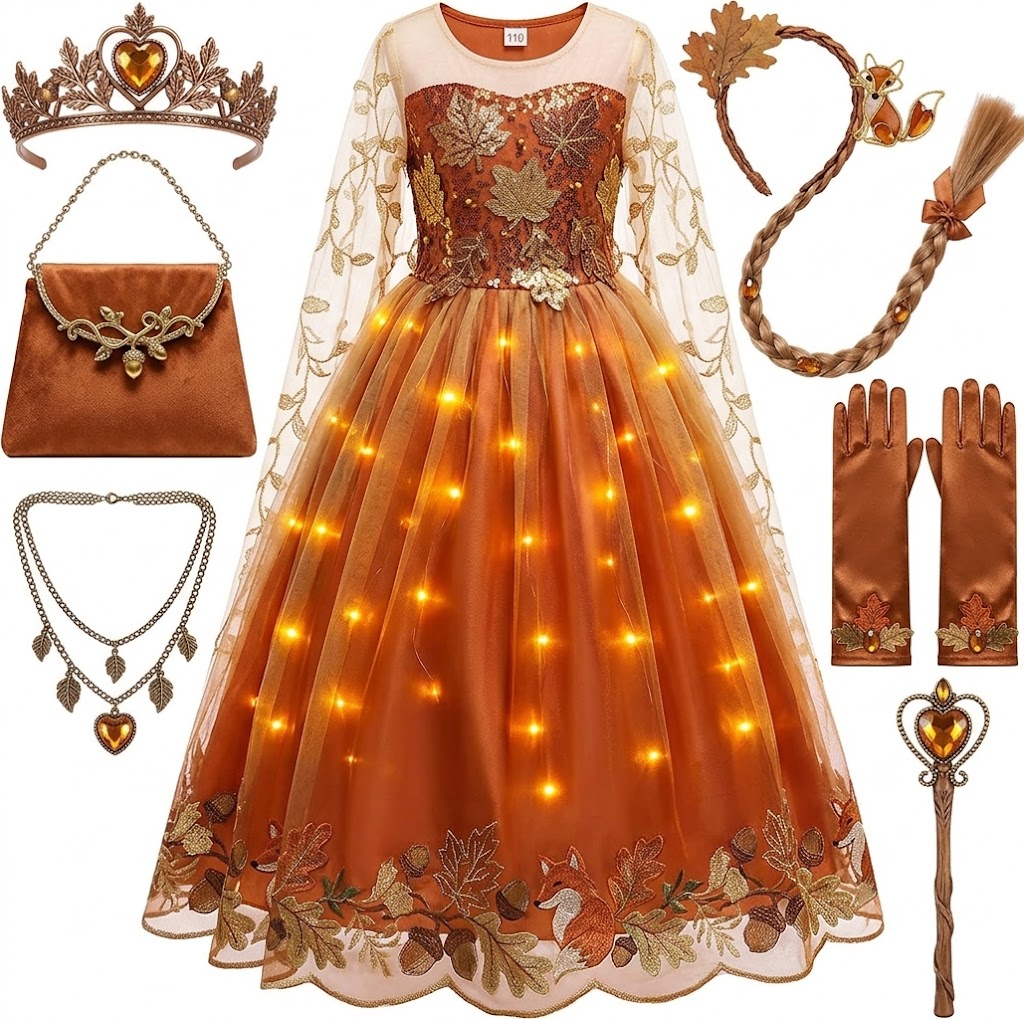
Princess Dresses for Girls Light Up Princess Costume for Christmas Halloween Toddler Princess Dress Up Clothes
Check Price on AmazonThe natural scenery draws on the same regional cues. Norway is known for fjords, steep mountain terrain, forests, and winter conditions, all of which appear in the films’ imagined world. These references create a convincing sense of place without making Arendelle a direct copy of a real town.
Other northern European influences may also be visible in the films’ broader visual style. Still, the safest and clearest description is that Arendelle is fictional and primarily Norwegian-inspired. It is more accurate to say “inspired by Norway” than to claim the kingdom represents one exact village or region.
Can you visit the places from Frozen?
You cannot visit Arendelle, Elsa’s ice palace, or Ahtohallan as real locations. They exist in Disney’s animated world. You can, however, visit Norwegian places with features that may remind you of the films, such as fjords, timber architecture, mountain scenery, and traditional cultural design.
Moonlite Disney Frozen 3-Story Bundle (Projector Sold
Check Price on AmazonSome travelers look to Norwegian fjord towns and historic wooden churches for a similar atmosphere. Those places are real communities and heritage sites, not official stand-ins for Arendelle. A particular viewpoint or building may feel familiar, but it should not be presented as the exact location shown in the movie.
Disney parks may offer Frozen-themed attractions, character appearances, or themed environments, depending on the park and current offerings. Those experiences bring the fictional setting to life for visitors, but they are not real Norwegian locations. Check the park’s current information before planning around a specific attraction or event.
Practical planning tip: If you want a trip inspired by the films, choose real places for their scenery or cultural history rather than searching for an “Arendelle address.” That helps set realistic expectations and leaves room to enjoy the actual destinations on their own terms.
Why the setting matters to the story
Arendelle is more than a backdrop. Its small scale makes the sisters’ choices feel personal: a change in the royal family quickly affects the harbor, the town, and the people who live there. When Elsa’s powers bring winter, the consequences are visible across the kingdom.
The fjord and mountains also shape how the story moves. The harbor connects Arendelle to the outside world, while the mountains create a physical barrier between the town and Elsa’s retreat. Those natural features help make the sisters’ separation feel both emotional and geographical.
In Frozen II, the change in setting reflects a change in the story’s questions. The first film focuses mainly on Elsa and Anna’s relationship and the immediate crisis in their kingdom. The sequel sends them into older, less familiar places to uncover what happened before their own lives began.
The forest and glacier make history feel tangible. They give the characters places to confront the past rather than only hearing about it. The expanded setting also makes clear that Arendelle’s story is connected to people and events beyond its borders.
Common questions about Frozen’s setting
Is Frozen set in Norway?
Not literally. The films are set in the fictional kingdom of Arendelle, which draws heavily on Norwegian and Scandinavian influences. Norway is the real-world inspiration, not the kingdom’s official location.
Is Arendelle a real town?
No. Arendelle is an invented kingdom created for the films. Its design borrows from real places and traditions, but there is no actual town with the same role in the story.
Where is Elsa’s ice palace?
Elsa creates her ice palace on the North Mountain in the first movie. The mountain is part of the fictional world around Arendelle, and the palace is a magical structure rather than a real building.
Where is the enchanted forest?
The enchanted forest appears in Frozen II, beyond Arendelle. A magical mist surrounds it, and the forest is home to the Northuldra people and elemental spirits.
Is Ahtohallan a real glacier?
No. Ahtohallan is a fictional glacier in Frozen II. The story gives it a mythic role connected to memory and the past, but it does not identify it as a real-world site.
Does the movie use an accurate map?
The films do not provide a dependable real-world map or exact travel distances. The locations are arranged to support the plot, so treat the geography as fictional rather than attempting to plan a route between them.
What to remember about Frozen’s geography
For the clearest mental map, start with Arendelle as the central kingdom. The first movie moves between its town, castle, harbor, and nearby mountains. The sequel adds the enchanted forest and Ahtohallan, which extend the story beyond the kingdom.
Keep the distinction between fictional location and real-world inspiration in mind. Norway helps explain the look and atmosphere of Arendelle, but it does not provide a real address for the kingdom. That simple distinction answers most questions about where the films take place without confusing the animated setting with actual travel destinations.
where does disney frozen take place? The main setting is Arendelle, a fictional kingdom inspired chiefly by Norway. The first film centers on the kingdom and the North Mountain, while Frozen II adds the enchanted forest and Ahtohallan.
You can’t visit Arendelle itself, but you can explore real Norwegian scenery and architecture that share some of its inspiration. For a trip, choose actual destinations for their own features rather than treating them as exact movie locations.