is elsa from frozen based on elsa jean? The Facts
No. There is no credible evidence that Elsa from Frozen was based on Elsa Jean, the American adult-film performer. The character was developed for Disney’s 2013 animated film, which draws loosely on Hans Christian Andersen’s fairy tale “The Snow Queen.”
The similar names have prompted online questions, but a name resemblance alone does not establish a connection. Here’s what is known about the film’s source material, Elsa Jean’s timeline, and how Elsa became the character audiences recognize.
is elsa from frozen based on elsa jean?
No. No reliable public evidence links Disney’s Elsa to Elsa Jean or identifies her as a model for the character. The best-supported explanation is that Elsa was created as part of Disney’s adaptation of “The Snow Queen,” a fairy tale by Danish author Hans Christian Andersen.
The confusion appears to come from the shared first name and the fact that both names became familiar to some people online. That similarity can make a rumor seem plausible at a glance. But it is not proof of inspiration, and no known production account substantiates the claim.
It also helps to separate a character’s inspiration from a coincidence in names. A character can draw on a story, theme, or earlier fictional figure without being based on a specific living person. In this case, the documented connection is to Andersen’s tale, not to Elsa Jean.
What inspired Disney’s Elsa?
Frozen takes its broad starting point from “The Snow Queen,” published in 1844. Andersen’s story follows a girl named Gerda as she searches for her friend Kai, who has been affected by fragments of a magical mirror and is taken to the Snow Queen’s palace.
Disney’s movie changes the story substantially. It gives Elsa a sister, Anna, and builds the plot around their relationship, Elsa’s struggle to control her ice powers, and the consequences of fear and isolation. The film’s central characters and events are not a scene-by-scene retelling of Andersen’s fairy tale.
That distinction matters. Saying Frozen is “based on” the fairy tale does not mean every character has a direct counterpart in it. Elsa is Disney’s original interpretation of the Snow Queen concept, shaped to serve a different story and emotional focus.
Andersen’s Snow Queen and Disney’s Elsa are not the same character
In Andersen’s tale, the Snow Queen is a mysterious figure who takes Kai away. Gerda is the main character who sets out to find him. Disney keeps the broad image of a powerful, icy woman but gives that figure a far more personal role.
Elsa is not simply a villain in the finished film. She is Anna’s older sister, and her powers create a conflict that grows from her fear of hurting people. The story asks viewers to understand her choices while also showing how those choices affect her kingdom and family.
The difference is useful when sorting out claims about Elsa’s origin. The movie’s roots in “The Snow Queen” are documented and visible in its icy imagery. A supposed link to a modern person requires separate evidence, and the name match does not provide it.
Why the Elsa Jean rumor is easy to believe
Elsa is a distinctive name, and placing the two names side by side invites speculation. Online posts can then repeat the suggestion without explaining where it came from. Repetition may make a claim look established even when no original source is offered.
Another source of confusion is the wording “based on.” People use it loosely to mean anything from “inspired by a story” to “modeled after a real person.” Those are different claims. The first has a clear connection in this case: Frozen draws loosely on Andersen’s fairy tale. The second would need evidence that a specific person influenced the character.
There is also a chronology worth keeping in view. Frozen premiered in 2013. Elsa Jean’s adult-entertainment career is generally reported to have begun in 2015. That timing does not, by itself, prove that a person could not have influenced an earlier creative process. It does show why a claim based on a later public career needs especially clear evidence rather than a name comparison.
What the available evidence supports: Disney’s character belongs to a film adaptation of a much older fairy tale. No credible account establishes Elsa Jean as the character’s source or model.
What changed during Frozen’s development?
Elsa’s role changed considerably as the filmmakers developed the movie. Early versions treated her more like a conventional antagonist. The finished film instead presents her as a frightened person whose attempt to avoid harming others leaves her isolated.
A major turning point came with the song “Let It Go.” As the song took shape, it gave the filmmakers a way to show Elsa expressing herself and embracing her powers. That creative shift helped the story move away from a simple good-versus-evil setup and toward a conflict between two sisters.
This development is often more revealing than speculation about a real-life model. It shows how a film character can emerge through writing, songs, performances, and revisions. Elsa’s personality and role were shaped to fit Frozen’s themes, not established as a portrait of a named person.
Elsa’s story serves the film’s themes
Elsa’s arc concerns fear, responsibility, and connection. She has been taught to hide her abilities because she worries they could hurt someone. Once her powers become public, she runs away, believing distance will protect her family and kingdom.
Disguise Frozen Elsa Shoes
Check Price on AmazonAnna’s story provides a contrast. She wants closeness and tries to reach her sister, even when she does not fully understand Elsa’s fears. Their relationship gives the film a different emotional center from the romance-led plots familiar in many earlier animated fairy tales.
These choices explain why Disney’s Snow Queen became a more sympathetic and complicated character. Her powers create the problem, but her isolation and fear drive much of the drama. The character’s function in the story is a stronger explanation of her design and behavior than an unsupported real-person theory.
How the two names compare
A quick comparison helps distinguish what is documented from what is merely suggested. The names overlap, but the available information points to different contexts and no verified creative connection.
| Topic | Elsa in Frozen | Elsa Jean | Best-supported takeaway |
|---|---|---|---|
| Who or what | A fictional Disney character | An American adult-film performer | They are different people and subjects |
| Where the name appears | Disney’s 2013 animated film | Public career reports generally date her career start to 2015 | The names overlap, but the contexts differ |
| Known connection | Frozen draws loosely on “The Snow Queen” | No credible source establishes a link to the character | No verified basis for the rumor is known |
| Best for understanding the claim | Film and fairy-tale background | Biography and career timeline | Use documented sources, not name similarity |
The table does not treat the dates as proof that influence was impossible. A movie takes time to develop before its release. The important point is that timing and shared names are not enough to establish inspiration; a reliable production source would be needed to support that claim.
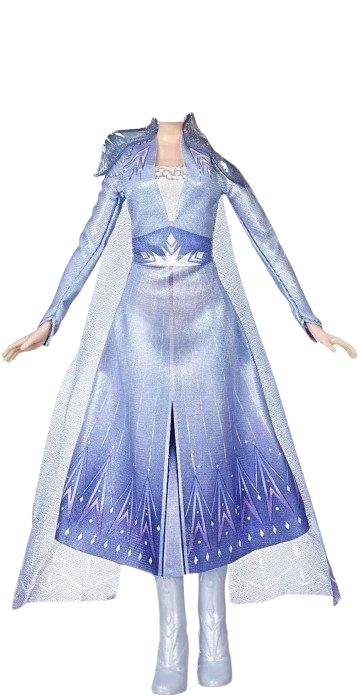
Disney Frozen Elsa Fashion Doll with Long Blonde Hair & Blue Outfit Inspired by Frozen 2
Check Price on Amazon
Frozen 2 Bluetooth Headphones with Microphone
Check Price on AmazonHow to check claims about a character’s real-life inspiration
When a post says a fictional character was “based on” a real person, check the claim in a few practical steps. This helps separate sourced reporting from a rumor that has simply been repeated.
- Look for an original source. Find a statement from the creators, studio, or a reputable interview. A post that gives no source is not confirmation.
- Check what the source actually says. “Inspired by,” “resembles,” and “based on” do not mean the same thing. Read the surrounding context before repeating a claim.
- Compare the timeline carefully. Consider when the character was developed, not only the film’s release date. A later release does not reveal exactly when every creative decision was made.
- Separate a name match from evidence. Shared names, appearances, or broad traits may prompt a question, but they do not prove that one person served as a model.
- See whether independent reporting agrees. If only unsourced social posts repeat the claim, treat it as unverified. Multiple copies of the same unsupported claim do not make it reliable.
Applied here, those checks lead to a straightforward answer. The known literary source is Andersen’s “The Snow Queen,” while no credible source ties Elsa Jean to Disney’s character.
Common questions about Elsa’s origins
Was Elsa named after Elsa Jean?
There is no reliable evidence that she was. The shared first name is not enough to establish that Disney named its character after a particular person.
Is Elsa a direct copy of the Snow Queen?
No. Frozen borrows the broad idea of a powerful icy queen from Andersen’s story, but it changes the characters, relationships, and plot. Disney’s Elsa is a distinct character created for the film.
Was Elsa meant to be a villain?
Elsa’s role changed during development. Early versions leaned more toward a villainous Snow Queen, while the released movie presents her as a complex protagonist whose fear and choices create conflict. “Let It Go” was an important part of the creative shift.
Does the timeline settle the question?
Not by itself. Frozen came out in 2013, and Elsa Jean’s career is generally reported to have started in 2015. Film development begins before release, so chronology is relevant context, not conclusive proof. The stronger point is that no credible evidence identifies her as the character’s inspiration.
Why do people keep repeating the claim?
The names are identical, and short posts can spread a simple suggestion without providing a source. Once a rumor is repeated, it may sound familiar enough to be mistaken for a confirmed fact. Checking for an original, reliable account is the simplest way to avoid that mistake.
What the evidence does and does not show
It is possible to state the answer clearly without claiming more than the evidence supports. Disney’s Frozen is loosely connected to “The Snow Queen,” and Elsa is a fictional character developed for that adaptation. The film’s story and character development explain her role in the finished movie.
What the evidence does not show is that Elsa Jean was a real-life model for Elsa. No credible production statement or reliable account establishes that link. The shared name is a coincidence unless evidence demonstrates otherwise.
That careful distinction applies to many entertainment rumors. A resemblance can be interesting, and a theory can be discussed as speculation. But a claim about who inspired a character should not be presented as fact unless a trustworthy source supports it.
Elsa from Frozen is not known to be based on Elsa Jean. The documented connection is to Andersen’s “The Snow Queen,” which Disney reworked into a story about two sisters.
When you see the claim repeated, look for a credible production source rather than relying on the shared name. Without one, treat the supposed connection as an unverified rumor.