elsa from frozen: powers, story, and character
elsa from frozen is the older sister of Anna and a queen born with the magical ability to create ice and snow. Across the films, she learns to understand her powers and chooses how to use them.
This guide explains Elsa’s background, abilities, relationships, and role in both Frozen films. It also clears up common misunderstandings about her story, including why she leaves Arendelle and what changes after Frozen II. Whether you are looking for a character overview or details to share with a young fan, you will find the main points in one place.
Who is elsa from frozen?
Elsa is a central character in Disney’s Frozen films. She is the elder daughter of King Agnarr and Queen Iduna of Arendelle, and Anna is her younger sister. Elsa becomes queen after her parents die and is known for her striking ice-blue clothing, pale hair, and magical abilities.
Her powers let her create and shape ice and snow. At first, she struggles to control them, especially when she feels afraid or overwhelmed. Her story is not about defeating a villain or getting rid of her magic. It is about understanding herself, repairing her bond with Anna, and deciding what kind of life fits her.
Elsa is often called an ice queen, but that label can be misleading. She is not a villain in the first film. She makes choices that cause problems, including running away and leaving Arendelle in a dangerous winter, but fear and isolation drive those decisions. The films give her room to learn, take responsibility, and grow.
Elsa’s story in the first Frozen film
Elsa’s magic appears when she is a child. While playing with Anna, she accidentally hits her sister with an icy blast. Their parents take Anna to the trolls, who heal her and remove her memories of Elsa’s magic. Elsa still remembers what happened, so she becomes afraid that she might hurt Anna again.
As the sisters grow up, Elsa keeps her distance and hides her hands. This choice is meant to protect Anna, but the isolation also makes their relationship painful. Anna cannot understand why her sister has shut her out, while Elsa receives little practice managing her powers around other people.
After their parents die, Elsa is crowned queen. During the celebration, Anna asks Elsa to approve her sudden engagement to Prince Hans. The sisters argue, and Elsa’s magic is exposed to the guests. She flees Arendelle, and her fear triggers a winter that spreads across the kingdom.
In the mountains, Elsa builds an ice palace and sings Let It Go. The song marks a release from the strict rules she has followed, but it does not mean she has solved every problem. She is alone, the winter continues, and she still does not know how to control her powers safely.
Anna goes after her. When Elsa accidentally strikes Anna’s heart with magic, the trolls explain that only an act of true love can thaw the resulting ice. Anna ultimately saves Elsa by placing herself between her sister and Hans. That choice shows Elsa that love, rather than fear, can help her bring her magic under control.
How Elsa’s powers work
Elsa can create ice and snow, shape it into objects, and influence cold weather. She makes decorations, a staircase, a palace, and Olaf, a snowman who becomes a lively character. Her power is flexible, but it responds to her emotions. Fear and distress can make it difficult to direct.
The films do not present her ability as a simple switch that she can always turn off. Elsa’s early attempts to suppress it increase her anxiety. She becomes more capable as she accepts that the power is part of her and learns to act with care. That difference matters: control comes from understanding and practice, not from pretending the magic is absent.
Her abilities also have limits. Elsa can cause harm by accident, and she cannot solve every conflict with ice. The first film’s turning point depends on Anna’s decision to protect her sister, not on Elsa overpowering Hans. In Frozen II, Elsa must also listen, investigate, and make difficult choices rather than relying only on magic.
Frozen II expands the magical world around her. Elsa encounters elemental spirits connected with fire, water, air, and earth, and discovers a deeper connection between her powers and the enchanted forest. The Nokk, a water spirit in the shape of a horse, becomes one of the most visible parts of that story.
Elsa’s role in Frozen II
In Frozen II, Elsa hears a mysterious voice calling to her. She follows it because it seems connected to questions about her family and the source of her powers. Her search leads her, Anna, Kristoff, Olaf, and Sven to an enchanted forest where Arendelle’s past has left unresolved harm.
The group learns that the conflict involves the dam built by their grandfather, King Runeard, and the Northuldra people. Elsa and Anna uncover the truth about their mother Iduna, who was Northuldra. The revelation connects the sisters to both Arendelle and the forest community, giving Elsa a reason to examine her heritage as well as her magic.
Elsa travels to Ahtohallan, a magical river associated with memories of the past. There, she learns more about what happened and how her family is tied to the conflict. She becomes frozen after going too far into the river’s depths, but Anna acts on the truth by destroying the dam. That choice frees the forest and helps repair the damage.
Elsa returns, and the story ends with a change in the sisters’ roles. Anna becomes queen of Arendelle, while Elsa remains in the enchanted forest and takes on a role connected with its spirits. This is not a rejection of Anna or their home. The sisters stay close, but each takes responsibility in a place where she can serve best.
How Elsa changes across the films
| Story stage | What Elsa faces | What changes | Best way to understand it |
|---|---|---|---|
| Childhood | Fear of hurting Anna | She hides her magic and pulls away | Her silence is protective, but it causes loneliness |
| Frozen | Her powers are exposed at her coronation | She learns that love helps her act with control | Acceptance replaces constant suppression |
| Frozen II | Questions about her powers and family history | She finds a place in the enchanted forest | She takes on a new responsibility without abandoning Anna |
The first film focuses on the sisters’ relationship and Elsa’s fear of her own magic. The second widens the story, asking where the power came from and how the past affects both communities. Elsa’s growth is therefore more than a change in confidence. She learns to connect her personal identity with the needs and history of others.
Elsa and Anna’s relationship
Anna and Elsa love each other, but they do not begin with an easy relationship. Anna wants closeness and answers. Elsa thinks distance is the safest option. Because neither sister knows the full story from the other’s point of view, both feel rejected in different ways.
Their bond develops through action rather than perfect communication. Anna risks herself to save Elsa, and Elsa later trusts Anna to make a difficult decision for Arendelle and the forest. They learn that being sisters does not require them to have the same personality, powers, or role.
Anna is more openly social and impulsive, while Elsa is cautious and often reflective. Those traits can clash, but they also help the sisters. Anna pushes for connection when Elsa retreats. Elsa’s care and attention help her see dangers Anna might overlook. Neither character is simply the sensible one in every situation.
A common misconception is that Frozen is mainly a romance story. Romantic relationships appear, especially Anna’s connection with Kristoff, but the central emotional relationship is between the sisters. Elsa’s story is not built around finding a partner. Her decisions focus on family, self-understanding, and responsibility.
The Frozen River: A GMA Book Club Pick
Check Price on AmazonWhat Elsa’s character represents
Elsa’s arc often resonates with viewers who have felt pressure to hide a part of themselves. Her gloves, closed doors, and controlled public image make that conflict easy to see. The comparison is not meant to say that every personal struggle is the same as magic. It shows how fear of judgment can lead someone to withdraw.
Her growth also challenges the idea that strong feelings should always be suppressed. Elsa does not become safe by refusing to feel anything. She becomes more capable when she understands her emotions and makes choices with care. That lesson is paired with an important limit: accepting yourself does not remove the need to consider how your actions affect others.
Responsibility is a major part of her story. Elsa’s fear helps explain why she leaves, but it does not erase the impact of the winter on Arendelle. She must return, repair what she can, and make choices that serve more than her own comfort. Frozen II adds a wider duty to the forest and its people.
The films also resist a simple idea of a perfect ending. Elsa and Anna do not have to stay in the same place to remain close. Their different roles are presented as a healthy change, not as a failure of their relationship. That is a useful detail for young viewers: love can remain strong even when people grow in different directions.
Elsa’s appearance, clothing, and familiar details
Elsa’s look changes as her story changes. In the first film, her coronation outfit reflects her public role as queen. After she leaves the castle, she wears a pale blue gown associated with her ice palace and her attempt to live without the rules of the court. In Frozen II, her clothing shifts again as she travels and learns more about the forest.
These designs help tell the story without explaining every feeling in dialogue. The coronation look is formal and controlled. The ice-blue dress suggests freedom, though Elsa is still isolated. Her later outfit is suited to movement and the colder, more mysterious places she visits.
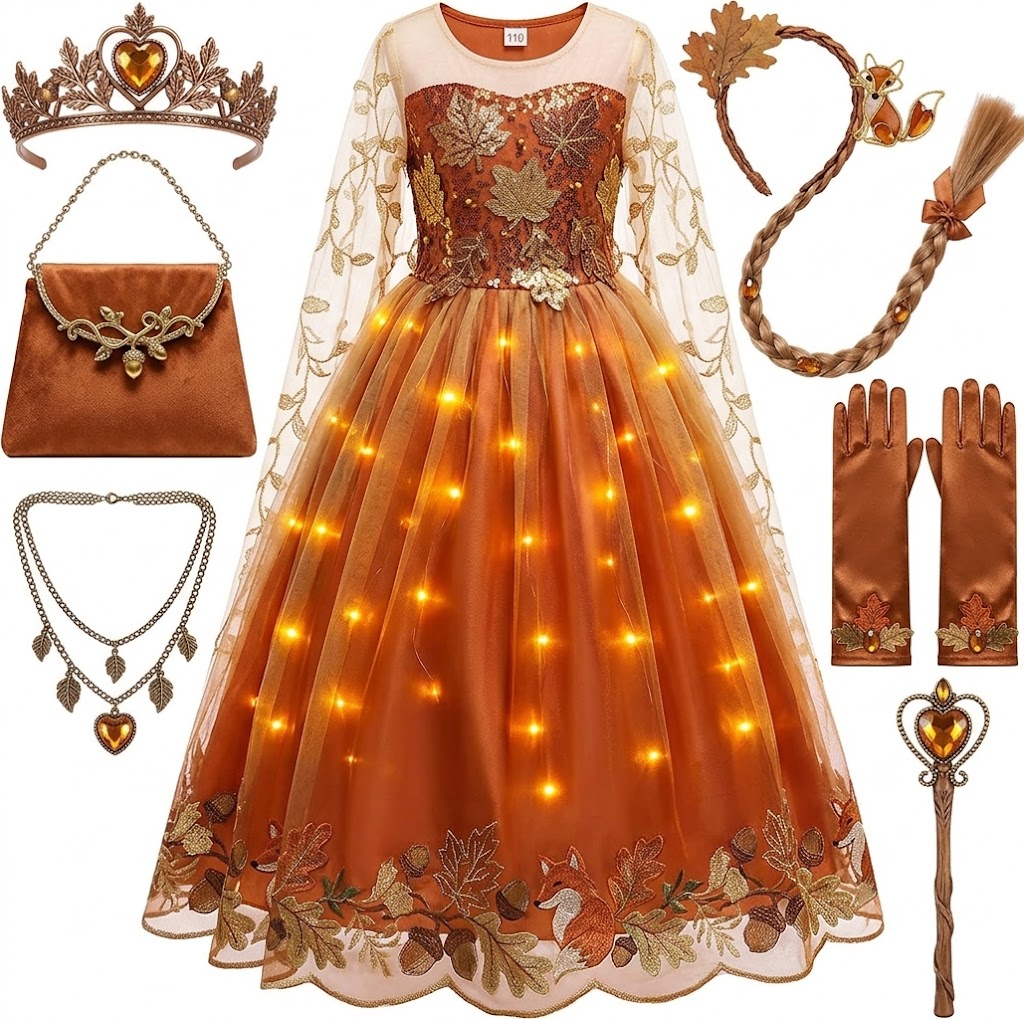
Princess Dresses for Girls Light Up Princess Costume for Christmas Halloween Toddler Princess Dress Up Clothes
Check Price on AmazonOlaf is another familiar part of Elsa’s story. She creates him from snow as a child, and the character becomes a cheerful companion to Anna, Elsa, and their friends. Olaf’s humor is often aimed at younger viewers, but his scenes also show the affection and imagination that remain part of Elsa’s connection to Anna.
Elsa is a fictional character, so details such as her exact age or the rules of her magic should be treated as details established by the films or official character materials, not as facts about real-world history or science. For a classroom report, distinguish what the movies show from fan interpretations.
Common questions about Elsa
Is Elsa a villain?
No. Elsa is a protagonist. Her fear leads her to make choices that create danger, but the story shows her taking responsibility and changing. She is not an evil queen, and the films do not frame her powers as proof that she is bad.
Why does Elsa leave Arendelle?
In the first film, Elsa runs away after her magic is revealed at the coronation. She is frightened that she may hurt someone, and she believes distance will protect the kingdom. In Frozen II, she travels to the forest to learn the truth behind the voice and her powers.
Does Elsa have a love interest?
The two Frozen films do not give Elsa a romantic partner. Her main relationships are with Anna, her family, and the people and spirits connected to her responsibilities. Claims about a romance beyond what the films show are fan ideas, not established story facts.
What does Elsa become at the end of Frozen II?
Elsa stays in the enchanted forest and takes a role as its protector, while Anna becomes queen of Arendelle. The sisters remain connected, but they now serve different communities and responsibilities.
Are Elsa’s powers explained fully?
Frozen II gives more information about her connection to the forest, the spirits, and her mother’s Northuldra heritage. The films explain more than the first movie does, but they do not turn every detail of her magic into a precise set of rules.
Details many viewers get wrong
One easy mistake is to treat Let It Go as the moment Elsa has complete control. The scene is a breakthrough in self-expression, but her choices still have consequences. The winter continues, and she needs Anna’s help to understand how love and her powers can work together.
Another common mix-up is to say that Anna’s act of true love is a romantic gesture. The decisive act is her sacrifice for Elsa. This makes the first film’s resolution distinct from a conventional story in which romance alone saves the day.
It is also inaccurate to say that Elsa gives up her family when she moves to the forest. The ending shows a new arrangement, not a severed bond. Anna and Elsa continue to care for each other, even though they live and work in different places.
For parents or teachers discussing the films with children, ask what Elsa was afraid of and what helped her change her choices. This keeps the conversation specific. It also avoids reducing her story to the vague message that anyone can do anything without considering consequences.
How to explain Elsa to a young fan
A simple explanation can start with three points: Elsa is Anna’s older sister, she can make ice and snow, and she learns that hiding her powers is not the only way to keep people safe. Then connect those points to a scene the child remembers, such as the coronation, the ice palace, or the journey to the forest.
- Explain the family connection. Anna and Elsa are sisters, and their relationship drives both films.
- Describe the magic clearly. Elsa creates ice and snow, but fear can make her powers harder to control.
- Point out how she grows. She learns to understand her abilities and take responsibility for her choices.
- Separate the two endings. Anna becomes queen of Arendelle, and Elsa stays connected to the enchanted forest.
If a child asks whether Elsa is good or bad, answer that she is a good person who sometimes makes mistakes. That explanation leaves room for the story’s complexity. It also shows that a character can be responsible for harm and still learn, repair relationships, and make better choices.
Elsa’s story moves from fear and isolation toward self-knowledge, connection, and responsibility. Her magic matters, but her relationship with Anna and the choices she makes matter just as much.
For a quick refresher on elsa from frozen, remember the key change between the films: she learns to accept her powers, then finds a role in the enchanted forest while Anna rules Arendelle. Revisit the coronation and forest scenes to see how those choices develop.