are elsa and anna friends? A Sisterly Bond
Yes, Elsa and Anna are friends as well as sisters, though Frozen presents their bond primarily as family love. They share the trust, affection, and support people often associate with close friends, even when fear and distance complicate their relationship.
Their connection changes across the films: childhood closeness gives way to years apart, then grows stronger as they face danger together. Here’s how the movies portray their bond, what each sister brings to it, and why their relationship is more complicated than a simple yes-or-no answer.
are elsa and anna friends in Frozen?
Yes, in the everyday sense of the word. Elsa and Anna care about each other, enjoy being together, and repeatedly offer one another trust and support. Their relationship also includes something friendship alone does not: they are sisters, with a shared childhood, family history, and responsibility for their kingdom.
The films focus on sisterhood rather than showing them as ordinary friends. That distinction matters because their closeness is shaped by family experiences that friends may not share. Elsa’s powers, their parents’ decisions, and a long separation create painful misunderstandings. Their affection remains, but it cannot make those problems disappear instantly.
So the clearest answer is that they are loving sisters with a strong friendship within their relationship. Their connection is not free of conflict. It becomes stronger when they communicate, accept each other’s differences, and make room for each sister to choose her own path.
How their relationship changes from childhood to adulthood
Close sisters before the separation
In Frozen, the opening scenes show Elsa and Anna playing together as children. Elsa uses her ice magic to make a snowy play space, and Anna is delighted by it. The scene establishes a warm, playful connection before an accident makes their relationship more difficult.
After Elsa accidentally injures Anna with her magic, their parents take Anna to the trolls for help. The trolls remove Anna’s memories of Elsa’s magic, and the king and queen later keep the sisters apart. Elsa is told to conceal and control her powers, while Anna does not understand why her sister has withdrawn.
Both girls are affected by the same family decision in different ways. Elsa experiences fear and isolation; Anna experiences confusion and rejection. Neither sister has the information needed to understand the other’s behavior. This gap, rather than a lack of affection, becomes the central obstacle between them.

Princess Play Tent for Girls, Frozen Toy, Ice Castle Kids Playhouse for Indoor & Outdoor
Check Price on Amazon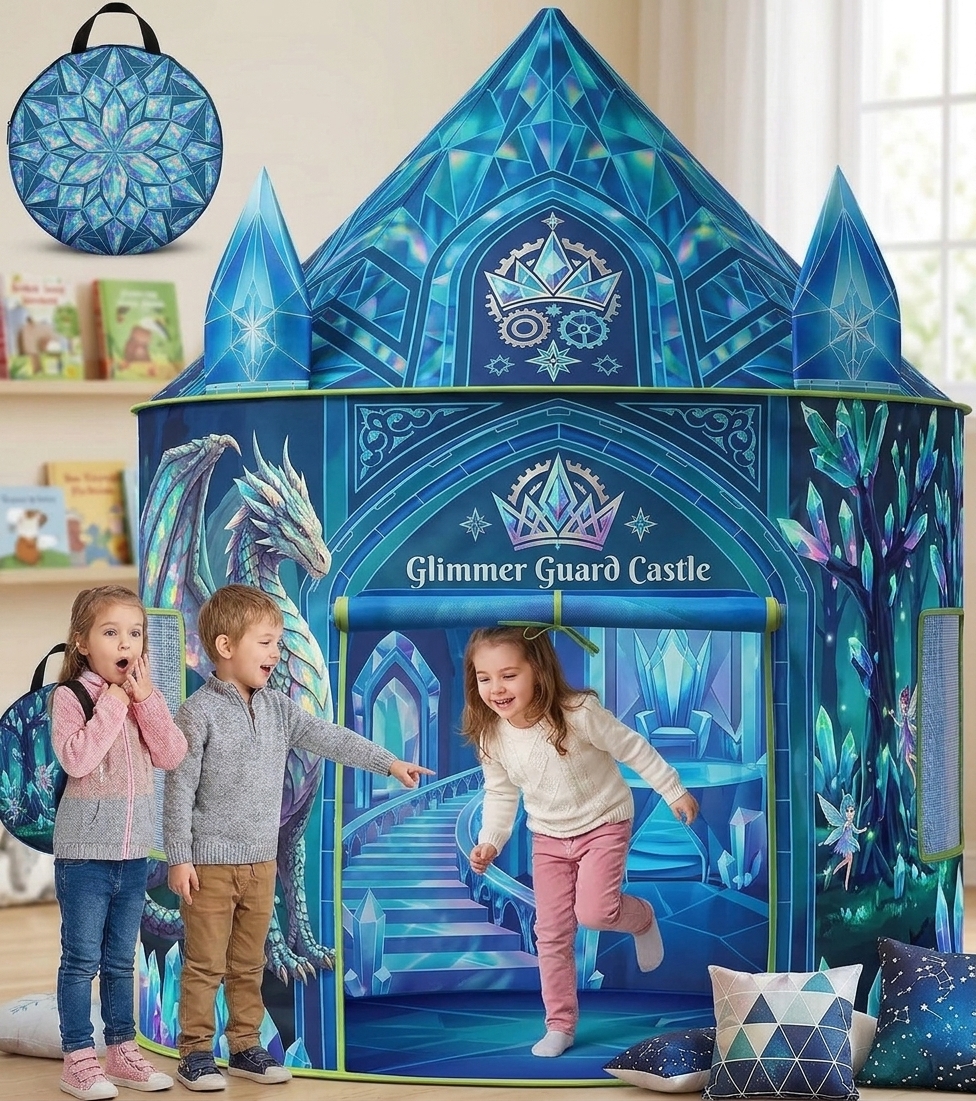
Princess Pop Up Play Tent, Frozen Toys for Girls
Check Price on Amazon
eKids Disney Frozen Karaoke Microphone with Bluetooth Speaker for Fans of Disney Toys
Check Price on AmazonFrozen Toys,Night Light Projector With 19 Films+15 Music,Girl Gifts For 2-6
Check Price on AmazonYears of distance and a reunion
When the castle gates open for Elsa’s coronation, Anna is eager to reconnect and meet new people. Elsa is anxious about losing control of her powers in public. Their hopes for the day differ, and the sisters argue after Anna announces her engagement to Hans, whom she has just met.
Elsa’s magic is revealed during the confrontation, and she flees Arendelle. Anna goes after her, even though she does not yet understand the danger or the full story behind Elsa’s powers. That choice shows affection and determination, but the sisters still struggle to speak openly. Elsa wants to protect Anna by sending her away; Anna wants to stay and help.
Their conflict is not settled by one conversation. Anna is struck by Elsa’s magic, and the sisters face a crisis that can only be resolved through an act of love. Anna’s sacrifice saves Elsa, and Elsa’s love helps thaw Anna’s frozen heart. The ending restores their closeness, but the years of separation help explain why they have to rebuild trust.
A stronger partnership in Frozen II
In Frozen II, Anna and Elsa begin from a more secure place. They live together in Arendelle and share affection with Kristoff, Olaf, and the people around them. Yet they approach risk differently. Anna is especially concerned about keeping her family safe, while Elsa feels drawn toward a mysterious call and the truth about her powers.
Those differences lead to tension. Anna fears that Elsa will leave her behind, while Elsa believes she must follow the call. Their disagreement is not proof that they are poor friends. It shows that closeness does not mean having identical goals or never feeling afraid.
As the sisters learn more about the past and the Enchanted Forest, each makes important choices. Elsa follows the call and discovers her connection to the forest; Anna takes responsibility for helping Arendelle. Their paths separate for a time, but their bond remains important to both of them. They trust each other to act with care, even when they cannot solve every problem side by side.
What makes their bond feel like friendship
Friendship usually involves affection, trust, shared experiences, and support through hard moments. Elsa and Anna show all of these qualities, though their relationship is also grounded in family ties. Looking at these traits helps explain why many viewers describe them as both sisters and friends.
- They enjoy each other’s company. Their childhood play and warm moments at home show that their connection includes fun, not only duty or crisis.
- They keep choosing one another. Anna pursues Elsa when she could stay safely in Arendelle. Elsa repeatedly shows that Anna’s safety matters deeply to her.
- They support different strengths. Anna often acts with persistence and practical courage. Elsa brings powerful magic and a willingness to confront difficult truths. They do not need to be alike to help each other.
- They repair conflict. Their arguments do not end their relationship. They reconnect, learn more about one another, and continue working through their differences.
- They make room for change. As adults, they do not have to live or lead in exactly the same way. Their bond can remain strong while their responsibilities and choices differ.
These qualities make their relationship recognizable to anyone who has a close friend or sibling. The films also show that care is not always expressed perfectly. Elsa’s attempts to protect Anna sometimes create distance, and Anna’s desire to stay close can make it hard for her to accept Elsa’s need to act alone.
Sisterhood and friendship: what is the difference?
The words describe overlapping parts of a relationship, but they are not identical. Friendship is a chosen bond between people. Sisterhood is a family relationship that comes with a shared history and family roles. Elsa and Anna’s connection includes elements of both, so neither label has to cancel out the other.
| Part of the relationship | How it appears between Elsa and Anna | What it means |
|---|---|---|
| Family history | They share parents, a home, and childhood memories. | Their bond began as sisters, not as strangers who later became friends. |
| Affection | They show joy in being together and care when the other is in danger. | Warmth and love are present even after years of separation. |
| Trust | They rely on each other to make difficult choices. | Trust grows through actions, not simply because they are related. |
| Conflict | Fear, secrecy, and different priorities cause arguments. | Disagreement can exist alongside love and friendship. |
| Independence | They take different roles and sometimes travel separate paths. | A close bond does not require them to make every choice together. |
The table helps clarify a common misunderstanding: family closeness is not automatic emotional closeness. Elsa and Anna are sisters from the start, but they need honesty and shared experiences to understand one another again. Their friendship-like qualities become more visible as they rebuild communication.
Why Elsa and Anna sometimes seem distant
Some viewers wonder whether Elsa truly cares about Anna because she spends so much of the first film avoiding her. The story gives a clear reason for that distance. Elsa fears that her magic could hurt Anna again and has been taught to hide it. Her withdrawal is an effort to prevent harm, even though it leaves Anna feeling rejected.
Disney Frozen Elsa Anna Girls Toddler Indoor Plush A-Line House Slippers
Check Price on AmazonAnna’s perspective is different. She remembers growing up with Elsa but cannot understand why her sister suddenly shuts her out. She seeks company and connection, partly because she has been lonely. The film asks viewers to recognize both experiences rather than treating one sister as entirely right and the other as entirely wrong.
Another source of tension is that the sisters often try to protect each other without explaining what they are doing. Elsa wants to keep Anna safe by pushing her away. Anna wants to help Elsa by following her. Their intentions are loving, but good intentions alone do not guarantee good communication.
A useful point to keep in mind: closeness does not mean that two people must always agree, share every secret immediately, or spend all their time together. The films treat independence as compatible with love. Elsa can follow a separate calling, and Anna can take on a different role, without their relationship becoming unimportant.
How each sister supports the other
Anna brings persistence and emotional courage
Anna is willing to act even when she feels uncertain. She seeks out Elsa after the coronation, stays focused on reaching her, and continues trying to connect even when Elsa pushes her away. That persistence helps the sisters move past silence and fear.
Her courage is not the same as being fearless. Anna can be worried, hurt, and frustrated, yet still choose to help. She also learns that loving someone does not mean controlling every decision they make. That lesson becomes important when Elsa follows her own path.
Elsa brings honesty about difference and responsibility
Elsa has to face her powers rather than treat them as something shameful. Her story shows the cost of hiding a part of herself out of fear. As she becomes more honest about what she can do and what she needs, she is better able to connect with Anna.
Elsa also shows care through protective action. At times, though, protection turns into separation. Her relationship with Anna improves as the sisters learn that safety cannot depend only on keeping difficult truths hidden. They need to trust each other with those truths.
They do not have to be interchangeable
Elsa and Anna contribute different skills, and that difference makes their partnership more believable. Anna is not simply a less powerful version of Elsa, and Elsa is not simply the older sister who must solve everything. Each has her own judgment and responsibility.
That distinction is especially clear in Frozen II, where their paths and roles are not identical. Their relationship is stronger when each sister can act independently and still remain connected. A supportive bond makes room for two people to grow, rather than requiring one person to follow the other’s life.
Does the story say they are best friends?
The films do not need to give Elsa and Anna the label “best friends” for viewers to see how close they are. Their relationship is framed first as that of sisters. They share affection and loyalty, but the story also explores family pressure, childhood separation, and the responsibilities that come with their roles.
Calling them best friends can be a reasonable personal description, especially if the phrase means that they are among the people each trusts most. Still, it is more precise to say they are sisters whose relationship includes strong friendship. That wording reflects both their family connection and the qualities they show as companions.
They also have other friendships. Anna forms a romantic relationship with Kristoff, and both sisters share meaningful connections with Olaf and other characters. Those relationships do not compete with the sisters’ bond. People can have several close relationships that serve different purposes.
What viewers can take from their relationship
Elsa and Anna’s story offers a practical picture of how close relationships can survive misunderstanding. Reconnection takes more than affection. It helps to explain what you are afraid of, listen to the other person’s experience, and avoid assuming that silence means a lack of care.
- Ask what is behind the distance. A person who pulls away may be afraid, overwhelmed, or unsure how to explain a problem. That does not make hurtful behavior harmless, but it can make the situation easier to understand.
- Say what you need clearly. Anna wants closeness, while Elsa wants to protect her. Their intentions are easier to understand once the sisters begin facing the truth together.
- Allow disagreement. A close relationship does not require matching opinions or plans. Respectful differences can be part of a healthy bond.
- Support growth, not dependence. Elsa and Anna become more capable of supporting each other when they can make their own choices rather than relying on constant proximity.
This is a useful lesson for siblings and friends alike. Care matters, but so do communication and boundaries. A person can love someone and still need space, and giving that space does not automatically mean the relationship is over.
Yes, are elsa and anna friends? They are sisters first, but their relationship also has the trust, affection, and support associated with close friendship. The films show that their bond grows through honest communication, difficult choices, and respect for each other’s independence.
For a quick way to read their relationship, look beyond whether they argue or spend time apart. Notice how they keep showing up for one another while allowing each sister to follow her own path.