when elsa was made: The story behind Frozen’s queen
when elsa was made depends on what you mean: Elsa first appeared on screen in Disney’s Frozen, released in U.S. theaters on November 27, 2013. The character took shape during the film’s development, drawing inspiration from Hans Christian Andersen’s Snow Queen while becoming a very different kind of heroine.
Here’s a clear timeline of Elsa’s creation and first appearance, plus how the filmmakers changed her role, what the Snow Queen connection really means, and when she returned in Frozen II. This distinction matters: the date the movie came out is clear, but Elsa’s creative development happened over time, not on one public, exact date.
when elsa was made: The short answer
Elsa made her screen debut in Frozen, which opened in U.S. theaters on November 27, 2013. She was created as a central character for the film, produced by Walt Disney Animation Studios and directed by Chris Buck and Jennifer Lee.
There is no single publicly established day when Elsa was first imagined, drawn, or finalized. A feature-film character develops through writing, design, casting, animation, and editing. Those stages overlap, and the finished Elsa reflects decisions made across the production rather than one moment of creation.
So the most useful answer is: Elsa was introduced to audiences in 2013, but her creative development took place during the making of the film. If you mean the story’s inspiration, the connection reaches back much further, to a fairy tale published in the nineteenth century.
Elsa’s timeline, from fairy tale roots to the movies
| Period or date | What happened | Why it matters |
|---|---|---|
| 1844 | Hans Christian Andersen published “The Snow Queen.” | The fairy tale supplied a broad source of inspiration, not a ready-made Elsa character. |
| Film development | Disney’s filmmakers developed a new story and characters inspired in part by the tale. | Elsa’s personality, relationships, and plot were shaped for Frozen. |
| November 27, 2013 | Frozen opened in U.S. theaters. | This is Elsa’s first theatrical appearance and the clearest answer to when she appeared. |
| November 22, 2019 | Frozen II opened in U.S. theaters. | Elsa returned in a new story about her powers, family, and the past. |
The dates in this table describe the source story and the films’ public releases. They do not claim that Elsa was invented in 1844 or that her design was completed on a particular day. Keeping those milestones separate helps avoid a common mix-up: the Snow Queen is an inspiration, while Elsa is a Disney character created for a modern movie.
How “The Snow Queen” relates to Elsa
Andersen’s “The Snow Queen” is a seven-part fairy tale about children named Gerda and Kai. The Snow Queen is a powerful, mysterious figure, and the story follows Gerda’s journey to find Kai after he is affected by fragments of a magical mirror. It is not the same plot as Frozen.
Disney’s film borrows a starting point from that story: a snow-associated queen with extraordinary power. But the movie reshapes that idea around two sisters, Elsa and Anna. Their bond, Elsa’s fear of hurting others, and her effort to understand her abilities drive the film’s central conflict.
That difference is important if you are looking for Elsa’s “original” story. Andersen did not write about Elsa, Anna, Arendelle, or the song “Let It Go.” Elsa is a new character developed for the film, with a loose literary connection rather than a direct one-to-one adaptation.
Stories inspired by older works often keep a theme, image, or character type while changing nearly everything else. In this case, the filmmakers used the idea of a snow queen as a creative springboard and built a family story with its own setting, characters, and ending.
Why Elsa was not simply the movie’s villain
One of the biggest changes during development was Elsa’s role. The early story concept treated her more like a traditional villain. As the filmmakers worked on the film, they reconsidered her motives and the relationship between her powers and her fear of causing harm.
A major turning point came through “Let It Go,” written by Kristen Anderson-Lopez and Robert Lopez. The song gave Elsa a moment in which she could stop hiding and express herself. It helped the filmmakers see her as a conflicted person seeking freedom, rather than as a straightforward antagonist.
That shift changed the story around her. Instead of making Anna’s goal simply to defeat Elsa, the movie makes their relationship the emotional center. Anna tries to reach her sister, while Elsa struggles with isolation, responsibility, and the consequences of keeping her powers secret.
What many summaries miss: Elsa’s transformation was not only a visual redesign. Changing her from a villain-like figure into a sympathetic sister affected the plot, the tone, and the meaning of the film’s songs. It is one reason that giving her a single “creation date” is misleading: a character’s identity can change substantially as a movie is written.
Who created Elsa for the film?
Elsa was made by a team, not by one person working alone. Chris Buck and Jennifer Lee directed Frozen, and Lee also wrote the screenplay. Songwriters Kristen Anderson-Lopez and Robert Lopez helped shape how Elsa’s feelings come across through music. Animators, visual development artists, editors, and other production staff contributed to the final character audiences saw.
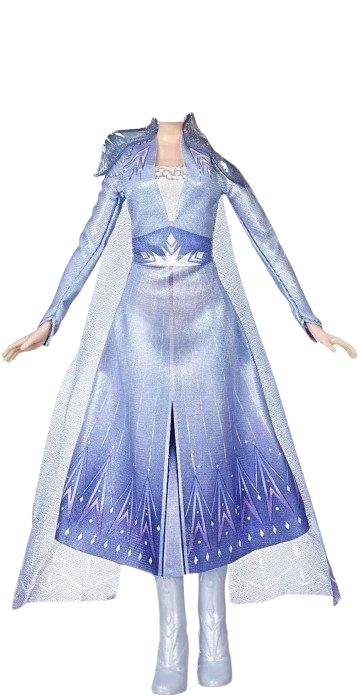
Disney Frozen Elsa Fashion Doll with Long Blonde Hair & Blue Outfit Inspired by Frozen 2
Check Price on Amazon
Frozen 2 Bluetooth Headphones with Microphone
Check Price on AmazonIdina Menzel voiced Elsa in the original English-language film. Her performance combines dialogue and singing, including the vocal performance of “Let It Go.” A voice actor’s interpretation can influence how a character feels on screen, but it is only one part of a much larger production process.
The character’s final look also came through collaboration. Artists develop and revise character designs so they work in different poses, expressions, lighting, and scenes. The design must communicate personality while remaining clear and consistent in animation. Costume, hair, movement, and facial expression all help viewers understand Elsa’s changing confidence and state of mind.
That means answers such as “Idina Menzel made Elsa” are incomplete. Menzel gave Elsa her original English-language voice, while the directors, writers, songwriters, animators, and other artists shaped different parts of the character. If you are asking who created the character, the accurate answer is the film’s creative team.
When did Elsa first appear in a movie?
Elsa first appeared in Frozen, released in the United States on November 27, 2013. The film introduces her as the elder daughter of Arendelle’s royal family and Anna’s sister. Her powers are kept secret for much of her childhood because she fears they could hurt Anna.
At Elsa’s coronation, her abilities become public. She flees Arendelle, and Anna sets out to find her. That event begins the sisters’ main conflict, but the story is not simply about Elsa learning to control magic. It is also about the harm caused by fear and secrecy, and the value of reconnecting with someone who has been shut out.
The release date refers to the U.S. theatrical opening. A movie may reach different countries on different dates, and screenings at festivals or premieres can happen before a general release. For a straightforward answer about when most audiences first saw Elsa in the original film, November 27, 2013, is the useful date.
When did Elsa return in Frozen II?
Elsa returned in Frozen II, which opened in U.S. theaters on November 22, 2019. The sequel takes place after the first film and follows Elsa as she investigates a mysterious call and the source of her powers. Anna, Kristoff, Olaf, and Sven join her as the group travels beyond Arendelle.
The first movie’s main question is how Elsa and Anna can repair their relationship and live with Elsa’s powers. The sequel broadens the story, asking what those powers mean and how the past has shaped their family and kingdom. Elsa remains a central character, but the second film gives her a new journey rather than repeating the original plot.
There are also short films and other Disney appearances connected to the franchise. Those do not change the answer about her first feature-film appearance: Elsa debuted in the 2013 Frozen. If you are asking when the character returned in a full-length sequel, the date is November 22, 2019.
What does “made” mean in this question?
The wording can point to several different dates, so it helps to identify what you want to know:
- When was Elsa first shown to movie audiences? Frozen opened in U.S. theaters on November 27, 2013.
- When was Elsa’s character created? Her development happened during the film’s production, but there is no single widely established public date for the first idea or finished design.
- When was the source tale written? Andersen’s “The Snow Queen” was published in 1844, but it does not feature Elsa.
- When did Elsa appear in the sequel? Frozen II opened in U.S. theaters on November 22, 2019.
These answers are not interchangeable. A source tale’s publication date is not the date a movie character was created, and a film’s release date is not necessarily the day every creative decision was finished. For a short answer, use the 2013 release date; for a fuller answer, explain that Elsa’s design and story developed over the film’s production.
Why Elsa’s development still matters
Elsa’s path from a frightening figure in an early story concept to a sympathetic central character helps explain the film’s emotional shape. Her powers are not presented only as a threat to others. They also stand for the pressure of hiding part of herself and the fear that accepting her identity could cause harm.
The film does not suggest that one song solves every problem. “Let It Go” marks a change in how Elsa sees herself, but the story continues to show the effects of her choices. She still needs to reconnect with Anna and face what has happened in Arendelle. That balance keeps the song’s celebration from becoming a simple, instant fix.
It also explains why Elsa’s development attracts questions long after the movie’s release. People may remember the character’s striking powers or the song first, then wonder how she began. The answer is a combination of literary inspiration, evolving story decisions, voice performance, and animation—not one moment or one creator.
For a school report or a quick fact check, state the distinction plainly: Elsa is an original Disney character loosely inspired by Andersen’s Snow Queen, and her first feature-film appearance was in Frozen in 2013. That wording is both concise and more accurate than calling her a direct copy of the fairy-tale character.
when elsa was made has two useful answers: Elsa’s first movie appearance was in Frozen, released in the U.S. on November 27, 2013, while her character took shape during the film’s development. Andersen’s 1844 “The Snow Queen” inspired the concept, but Elsa and her story are distinct creations.
For a quick fact, use the 2013 release date. If you are explaining her origins, add that the filmmakers reshaped the Snow Queen idea and developed Elsa as Anna’s sister and the emotional center of the story.