who was elsa from frozen named after: the real story
There is no confirmed real person that Elsa from Frozen was named after. If you are asking “who was elsa from frozen named after,” the clearest answer is that Disney has not publicly identified a namesake; Elsa is a fictional character loosely inspired by Hans Christian Andersen’s “The Snow Queen.”
That connection does not mean Elsa is a direct copy of the fairy tale’s Snow Queen, or that Andersen’s story contains a character named Elsa. The movie changes the source material substantially, and the origin of a character’s name is a separate question from the story that inspired her.
Here is what is known, what the film borrows, and how Elsa’s name relates to the name Elisabeth. You will also see which common claims are supported and which go further than the available information.
who was elsa from frozen named after?
No confirmed individual is known to be the namesake for Elsa. Disney’s 2013 film Frozen draws loose inspiration from Hans Christian Andersen’s 1844 fairy tale “The Snow Queen,” but that story does not feature a character named Elsa. Its central children are Gerda and Kay, and its Snow Queen is a different figure from the young queen in the film.
This distinction answers two questions that are often mixed together: where the film’s story came from, and where its main character’s name came from. The story has a documented literary connection to Andersen. A specific person, relative, historical queen, or fairy-tale character as the source of the name Elsa has not been established in reliable public accounts of the film’s creation.
So, if you have seen a post claiming Elsa was named after a particular real person, treat it cautiously unless it points to a clear statement from the filmmakers or Disney. A name can have an established history and meaning without having been chosen in honor of one specific person.
How “The Snow Queen” connects to Frozen
Hans Christian Andersen’s “The Snow Queen” is the best-known literary starting point for Frozen. The connection is an adaptation inspiration, not a scene-by-scene retelling. The film’s creators developed a new plot, relationships, and characters while drawing on the older story’s winter imagery and themes.
In Andersen’s tale, a troll’s mirror breaks into pieces. Splinters enter Kay’s eye and heart, changing how he sees the world and making him cold toward Gerda. The Snow Queen carries him away, and Gerda sets out to find him. Her loyalty and persistence help bring him back.
The film uses some recognizable echoes, but changes their function. Elsa has dangerous ice magic, and her separation from Anna becomes central to the story. Anna takes on parts of the determined journey associated with Gerda, while Kristoff, Olaf, and other characters are original additions to the movie’s cast. The film also shifts the emotional center toward the relationship between two sisters.
That shift matters to the naming question. Elsa is a Disney-created character in a newly shaped story, rather than a character whose name was simply carried over from Andersen’s fairy tale. The literary influence helps explain the film’s premise and winter setting, but it does not identify a namesake for Elsa.
Elsa, Gerda, and the Snow Queen: what is different?
Comparing the characters makes it easier to see why saying “Elsa was named after the Snow Queen” can be misleading. Elsa and the Snow Queen have similarities in their association with ice and cold, but they are not the same character. Their roles, motivations, and relationships are quite different.
| Character or figure | Where the name appears | Role in the story | Best way to describe the connection |
|---|---|---|---|
| Elsa | Disney’s Frozen | A queen with ice and snow powers whose relationship with her sister shapes the plot. | A Disney character with no confirmed real-world namesake. |
| The Snow Queen | Andersen’s “The Snow Queen” | A supernatural queen who takes Kay to her palace. | A literary inspiration and a possible parallel, not Elsa’s confirmed identity or namesake. |
| Gerda | Andersen’s “The Snow Queen” | A girl who travels to find Kay and bring him home. | A source-story character with a journey that has echoes in Anna’s role. |
| Anna | Disney’s Frozen | Elsa’s sister, who seeks to reconnect with her and protect their bond. | A new film character, not a direct replacement with the same story as Gerda. |
The table shows why it is more accurate to say that Elsa’s character is partly inspired by the broader idea of the Snow Queen than to say she was named after Andersen’s character. Andersen’s queen has no personal name in the original tale; “the Snow Queen” is her title. Elsa has her own identity, history, and character arc in the film.
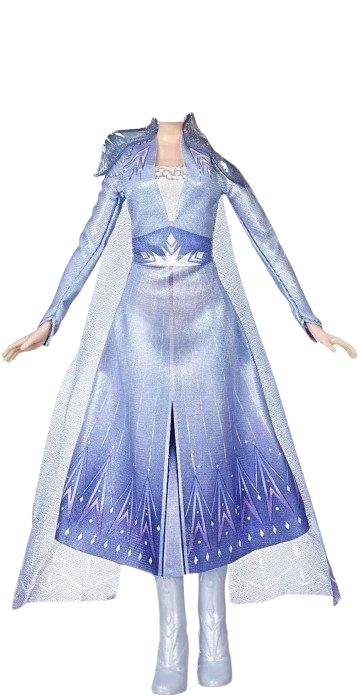
Disney Frozen Elsa Fashion Doll with Long Blonde Hair & Blue Outfit Inspired by Frozen 2
Check Price on Amazon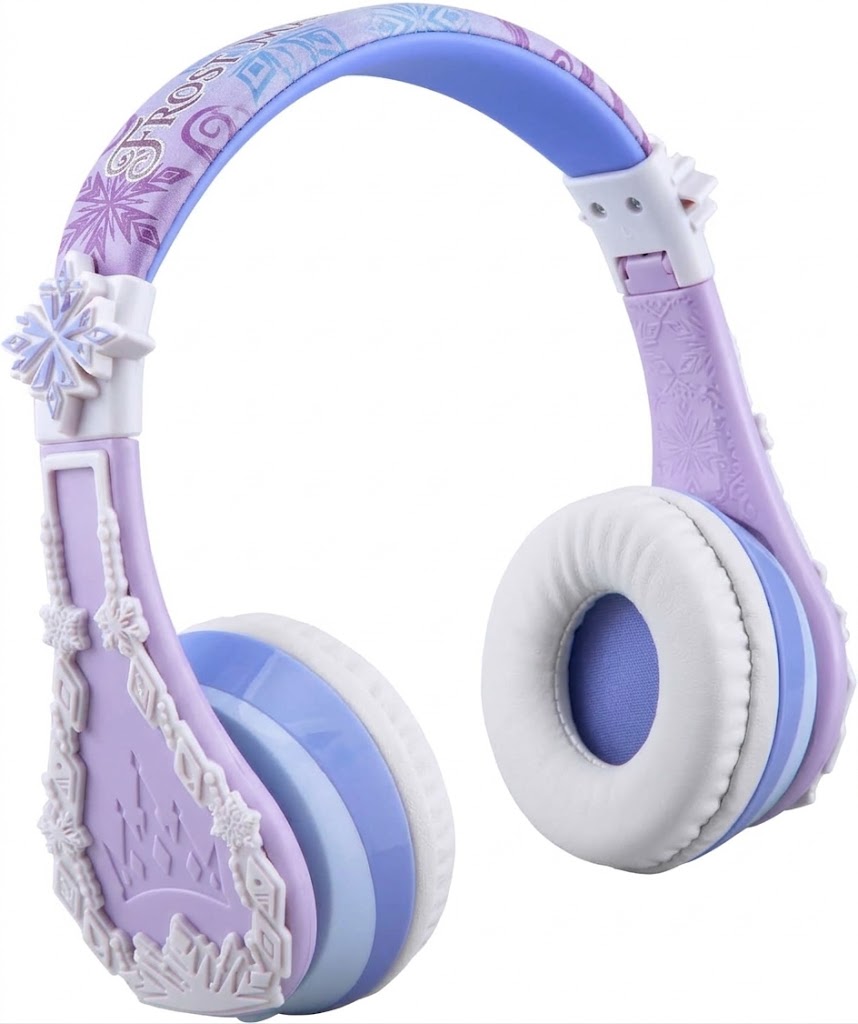
Frozen 2 Bluetooth Headphones with Microphone
Check Price on AmazonWhat does the name Elsa mean?
Elsa is commonly used as a short form of Elisabeth, also spelled Elizabeth. Elisabeth is a name with Hebrew roots, usually traced to Elisheva. Its meaning is commonly rendered as “my God is an oath” or “God is my oath.” Wording can vary among name references because the name passed through different languages and forms over time.
This is the name’s general etymology: its linguistic history and meaning. It does not prove that Disney chose the name for that meaning, or that the character was named after someone called Elisabeth. The origin of a name and the reason a writer selects it for a character are separate matters.
Elsa is a familiar name in several European languages, including German and Scandinavian contexts. Its established use makes it a plausible choice for a fictional queen in a northern-European-inspired setting. That is a reasonable observation about how the name fits the film, not a documented explanation from the filmmakers.
In other words, it is safe to explain what Elsa is commonly short for and what the name is generally understood to mean. It is not safe to turn that information into a definite claim about Disney’s private naming decision without a direct source.
Why do people think Elsa was named after someone?
Questions about a character’s namesake often arise because audiences notice a resemblance between a fictional character and a real person, writer, or earlier story. Those associations can be interesting, but resemblance alone does not establish that a name was chosen in tribute.
There are a few common sources of confusion around Elsa:
- The Snow Queen connection: The film is inspired by Andersen’s tale, so some people assume every major element, including Elsa’s name, came directly from it. The tale’s queen is not named Elsa.
- The name’s European history: Elsa is a traditional given name, and its use can make the film’s characters feel connected to European folklore. That context does not identify one person as the source.
- Fan theories: Online discussions sometimes propose a specific author, relative, or historical figure as the inspiration. Unless a reliable source confirms the claim, it remains speculation.
- Confusing a character’s inspiration with a name’s origin: A character can borrow traits or themes from an older story while receiving a completely new name.
A useful way to assess a claim is to ask what kind of evidence it offers. A direct statement from a writer or director is stronger than a fan page that repeats the claim without a source. A name dictionary can explain the history of “Elsa,” but it cannot establish what Disney’s creative team had in mind.
Disguise Frozen Elsa Shoes
Check Price on AmazonWhat is known about Elsa’s creation?
Elsa was created for Disney’s animated film Frozen, released in 2013. The movie’s development involved substantial changes to the material inspired by “The Snow Queen.” In the finished story, Elsa is not simply a villainous or distant supernatural figure. She is a sister, a ruler, and a person trying to understand and control a power that frightens her.
That characterization is one of the film’s major departures from a simple retelling. Elsa’s powers lead to fear and isolation, while Anna’s determination to reach her helps carry the emotional plot. The story focuses on their bond and on the consequences of hiding a part of oneself. These themes belong to the movie’s adaptation and do not reveal who, if anyone, supplied Elsa’s name.
The source tale and the film also differ in how they treat love and rescue. Gerda’s journey to save Kay is a central thread in Andersen’s tale. Frozen makes the sisters’ relationship central and gives the story its own resolution. That reworking is another reason not to treat Elsa as a renamed version of one older character.
Public accounts of a film’s inspiration can be detailed without documenting every creative choice. A story may clearly be inspired by a fairy tale even if the origin of a character’s first name is not publicly explained. Lack of a confirmed namesake is not proof that the name was chosen randomly; it means the available evidence does not support a more specific answer.
Is Elsa based on a real queen or a person named Elsa?
There is no confirmed real queen or historical person identified as the model for Elsa’s name. The film gives Elsa a fictional kingdom, Arendelle, and a royal role, but a royal setting does not mean that each character corresponds to a historical ruler.
People sometimes connect the film’s setting and names to Scandinavian history or culture. Those comparisons can help viewers talk about the movie’s visual and cultural influences, but they should not be presented as proof of a one-to-one historical source. The movie is a work of fantasy, and its characters are not biographies of actual monarchs.
Likewise, the existence of real people named Elsa does not show that one of them inspired the character. To make that claim responsibly, there would need to be credible evidence linking the person to the film’s writers or to the naming decision. Without that evidence, “Elsa was named after [a particular person]” goes beyond what is known.
Common misconception: a character can be inspired by a fairy tale without sharing the names of its characters, and a name can fit a setting without honoring a historical person. Keeping those points separate avoids turning a reasonable guess into supposed fact.
How to check claims about the name
If you encounter a specific story about Elsa’s namesake, use a quick source check before repeating it. This is especially useful when a post gives a confident answer but no citation or attributes the claim vaguely to “Disney.”
- Look for a direct source. Check whether a writer, director, or official Disney source actually states that Elsa was named after the person in question.
- Separate source material from naming history. Evidence that Frozen drew on “The Snow Queen” supports a claim about literary inspiration. It does not, by itself, prove where the name Elsa came from.
- Check what the source proves. A dictionary can explain the origin or meaning of the name. It cannot confirm the intention behind a film’s character name.
- Notice repeated unsourced claims. Several websites repeating the same sentence do not necessarily make it reliable, especially if they all trace back to one unsupported post.
- Use careful wording. If a theory lacks confirmation, call it a theory or say that the connection has not been established.
This approach helps with movie trivia more broadly. It lets you share the interesting literary connection while being clear about what is documented and what remains unknown.
How to answer the question accurately
A short answer can still include the important distinction. Say that Elsa has no confirmed named-after person, then mention that Frozen was loosely inspired by Andersen’s “The Snow Queen.” If useful, add that the tale’s central characters include Gerda and Kay, not Elsa.
Avoid saying Elsa “was named after the Snow Queen” unless you are using the phrase loosely and clarify that it is not a documented name origin. The Snow Queen is a literary influence on the film, but the original character is not called Elsa. That difference is small in wording but important in accuracy.
You can also explain the name’s etymology separately: Elsa is commonly a short form of Elisabeth, a name with Hebrew roots. Make clear that this is information about the name itself, not proof of why the filmmakers selected it.
This balanced answer is more useful than a confident but unsupported claim. It gives readers the known connection, clarifies what the source story actually contains, and leaves room for the possibility that the filmmakers chose the name for reasons they have not publicly explained.
There is no confirmed real person that Elsa was named after. Frozen takes loose inspiration from “The Snow Queen,” but Andersen’s tale does not include a character named Elsa, and its literary connection does not establish the name’s source.
For a precise answer to “who was elsa from frozen named after,” say that no specific namesake has been publicly confirmed. You can mention that Elsa is commonly a short form of Elisabeth, while keeping the name’s etymology separate from the film’s undocumented naming choice.