how would you describe elsa from frozen: her key traits
Elsa is a thoughtful, powerful, and compassionate queen whose ice magic reflects feelings she struggles to control. In Frozen, she begins as a frightened young woman who hides her abilities, then learns that love and trust can help her use them without fear.
Her character is more than her powers or her famous blue dress. Elsa’s story explores responsibility, family, self-acceptance, and the difference between being cautious and shutting people out. The details below explain her personality, relationships, character development, and the most useful ways to describe her in a discussion or piece of writing.
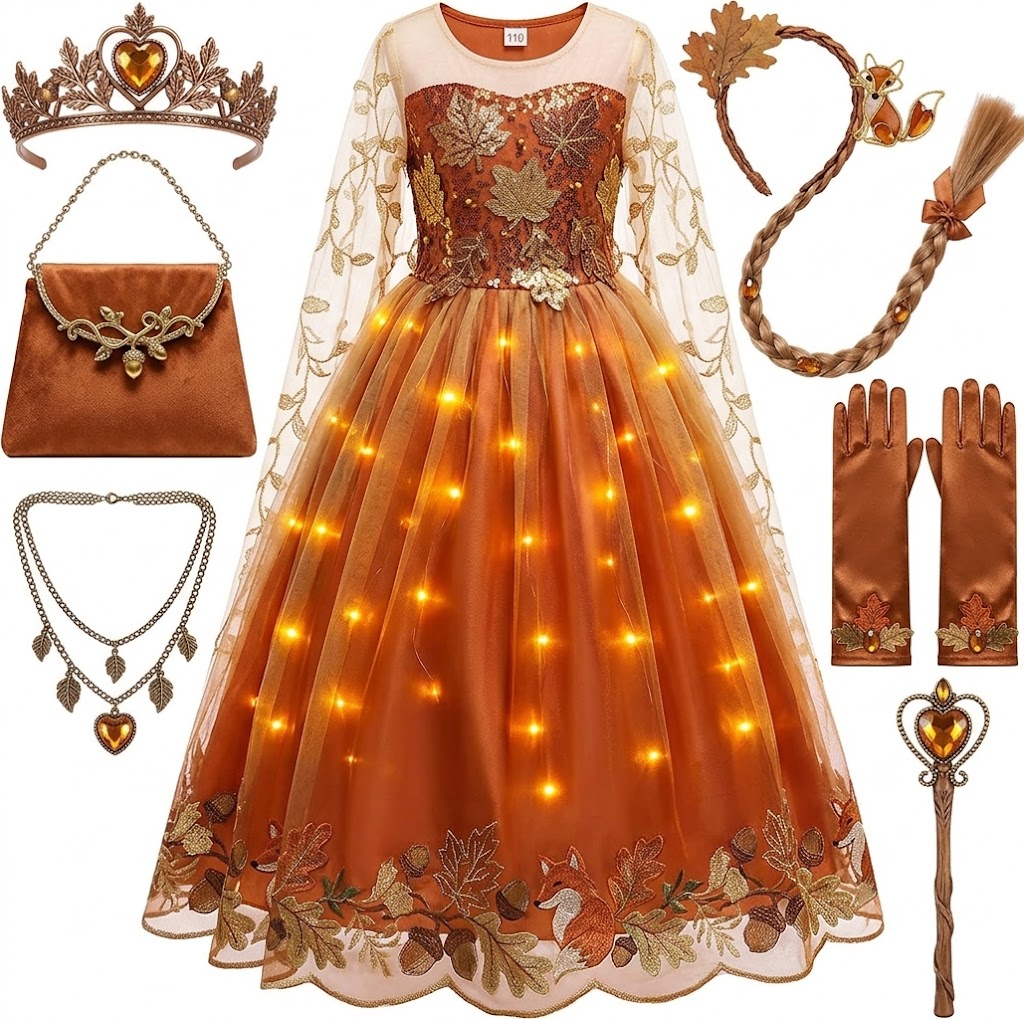
Princess Dresses for Girls Light Up Princess Costume for Christmas Halloween Toddler Princess Dress Up Clothes
Check Price on AmazonHow would you describe elsa from frozen?
Elsa is a reserved, intelligent, and caring character who has the ability to create and control ice and snow. She is the elder daughter of Arendelle’s rulers and Anna’s older sister. At the start of the first film, she keeps her distance from others because she fears her magic could hurt them. Her guarded behavior comes from anxiety and a strong sense of responsibility, not from a lack of affection.
That distinction is central to understanding her. Elsa can seem cold or distant, but she is not uncaring. She loves Anna and wants to protect her, yet believes that isolation is the safest way to do it. Her story follows her as she learns that hiding her feelings and abilities cannot solve every problem.
A concise description might be: Elsa is a brave but cautious queen who learns to accept her powers, trust her sister, and let love guide her choices. That description captures both her strengths and the conflict that makes her character compelling.
Elsa’s personality: careful, compassionate, and independent
Elsa is naturally composed and observant. She thinks carefully before acting, especially when she believes someone could be at risk. As a princess raised to take on public duties, she also learns to behave with formality and self-control. These qualities help her fulfill her role, but they can make her feel alone when she treats every emotion as something to conceal.
She carries responsibility heavily
Elsa often puts other people’s safety ahead of her own comfort. As a child, she is told to conceal her magic after an accident injures Anna. She then grows up believing that one mistake could put her family or kingdom in danger. Her caution is understandable, but it also turns into a burden: she tries to manage the risk by avoiding closeness altogether.
This makes responsibility one of her defining traits. Elsa does not simply want to be powerful or admired. She wants to do no harm. A useful description should show both sides: her sense of duty is admirable, while her belief that she must handle everything alone causes trouble.
She is kind, even when she seems distant
Elsa’s restraint can be mistaken for snobbery or indifference. In reality, she cares deeply about Anna and feels guilty when her magic causes harm. She also wants to protect Arendelle, even when fear makes her choices less helpful. Her kindness is often quiet rather than openly cheerful.
She is not instantly comfortable with affection or attention. That does not mean she rejects love. It means she has spent years associating emotional openness with danger. As she begins to trust Anna and herself, she becomes more able to connect honestly with the people around her.
She has a strong independent streak
Elsa makes important choices for herself, even when those decisions are difficult. In the first film, she leaves Arendelle after her powers are revealed and tries to build a life away from the fear and expectations that have shaped her. In the second film, she follows a mysterious call because she wants to understand where her magic comes from.
Her independence is not the same as rejecting everyone else. She needs space to understand herself, but she also learns that independence does not require isolation. Her relationship with Anna becomes stronger when both sisters can act as individuals and still rely on each other.
How Elsa’s ice powers shape her story
Elsa’s magic gives her the ability to create ice and snow, including detailed structures and living snow creatures. The power is visually striking, but its main purpose in the story is to make her inner conflict visible. When she is frightened or overwhelmed, she struggles to control what her magic does. When she accepts herself and acts with care, the power becomes less of a source of shame.
It is tempting to treat the magic as a simple symbol for emotions. That is part of its meaning, but the story is more specific: Elsa fears that her power will injure people, and that fear affects her relationships and decisions. Her challenge is not merely to feel more confidently. She must learn how to use her abilities responsibly while recognizing that being different does not make her dangerous by nature.
Her powers also affect how others see her. The public expects a queen to appear controlled and predictable, while Elsa worries that revealing her abilities will change her identity in their eyes. The gap between her public role and private fear helps explain why she works so hard to maintain her composure.
Elsa’s character development in the two films
Elsa’s growth is not a quick switch from frightened to fearless. Each film gives her a different question to answer: first, how can she stop treating herself as a threat? Later, how can she understand her place in a larger history without losing the people she loves?
In Frozen: from hiding to accepting herself
As a child, Elsa accidentally injures Anna with her magic. The trolls help Anna recover and remove her memories of the magic, while Elsa is advised to keep it hidden. Elsa and Anna are then separated as they grow up. Elsa learns to suppress her abilities and avoid emotional closeness, while Anna does not understand why her sister has withdrawn.
At Elsa’s coronation, her powers are exposed. She flees Arendelle, believing that distance will keep others safe. In the mountains, she briefly feels free to use her magic without hiding it. But the winter affecting the kingdom shows that personal freedom alone cannot resolve the harm caused by fear and secrecy.
Anna’s willingness to reach her is essential to the resolution. Elsa learns that love is not just a feeling she must suppress to stay in control; it can help her respond to her magic with care. Her change does not erase her fears. It gives her a healthier way to face them and to reconnect with her sister.
In Frozen II: from self-discovery to a new role
In the second film, Elsa hears a mysterious voice and senses that something is wrong beyond Arendelle. She travels with Anna, Kristoff, Olaf, and Sven toward the Enchanted Forest. There, she learns more about her family’s history, the conflict between Arendelle and the Northuldra, and the source of her powers.
Elsa’s search is driven by curiosity and a desire for truth. She must also face the danger of pursuing answers without help. Anna remains her closest ally, even though the sisters sometimes have to act separately. Their bond grows beyond the old pattern in which Elsa makes decisions for Anna’s protection and Anna tries to pull Elsa back into closeness.
By the end, Elsa discovers that she is connected to the elemental spirits as the Fifth Spirit. She stays in the forest, while Anna becomes queen of Arendelle. This change does not mean Elsa abandons her family. The sisters remain connected, but each takes on a role that better fits her strengths and responsibilities.
Key traits to use when describing Elsa
Choose traits that fit the point you want to make instead of piling on flattering adjectives. Elsa’s character includes both admirable qualities and struggles. Pairing a strength with its complication gives a more accurate description.
| Trait | How it appears | Useful way to describe it |
|---|---|---|
| Responsible | She worries about the effects of her powers and her decisions. | She takes her duty seriously, sometimes to the point of carrying too much alone. |
| Compassionate | She wants to protect Anna and the people of Arendelle. | Her care is genuine, though fear can keep her from showing it openly. |
| Reserved | She hides her feelings and avoids closeness when she is afraid. | She is guarded, not heartless. |
| Independent | She seeks answers and makes difficult choices about her future. | She values self-understanding while learning that support matters. |
| Brave | She faces danger and confronts painful truths about her family. | Her courage means acting despite fear, not never feeling afraid. |
| Creative | She uses ice to make elaborate shapes and structures. | Her imagination is expressed through the distinctive forms of her magic. |
Some traits fit better at particular points in the story. Early Elsa is especially guarded and anxious. Later Elsa becomes more confident in her abilities and more willing to pursue answers. She remains thoughtful and responsible throughout, but she gradually learns that those qualities do not require her to hide.
Elsa and Anna: two different ways of showing love
Elsa and Anna are sisters who respond to separation and fear in opposite ways. Anna seeks connection quickly and openly. Elsa holds back because she believes distance protects her sister. Neither approach tells the whole story: Anna can act without knowing all the risks, while Elsa can make protective decisions without explaining them.
Their differences create conflict, but they also help each other grow. Anna encourages Elsa to trust and reconnect. Elsa’s caution reminds Anna that care sometimes requires patience and attention to consequences. Their relationship works best when they listen to each other rather than assuming they already know what the other needs.
It is inaccurate to describe the sisters as rivals or to say Elsa simply rejects Anna. The first film shows how the lack of honest communication hurts them, not that they lack love. Across both films, their bond becomes more mature: they can be close without having to make identical choices or live in the same place.
What people often get wrong about Elsa
- She is not naturally cold. Her controlled manner grows out of fear and years of hiding her powers. She has strong feelings, but often struggles to express them safely.
- Her magic does not make her a villain. The danger comes from fear, secrecy, and difficulty controlling the power, not from a desire to hurt people.
- She does not solve everything by becoming fearless. Her progress comes from accepting support and responding thoughtfully, even when she remains uncertain.
- Her story is not only about romance. The films focus strongly on sisterhood, responsibility, identity, and the way family history shapes the present.
A subtle but useful point is that Elsa’s restraint can be both a strength and a problem. It helps her think before acting, but it becomes harmful when she believes she must never show vulnerability. Calling her simply “shy” misses how much of her behavior comes from fear and learned self-protection.
How to write a strong description of Elsa
If you are writing a character paragraph, start with a clear main idea. Then support it with a specific choice or turning point from the films. A description becomes more convincing when it explains why a trait matters rather than listing several traits without examples.
- State the central idea. For example, explain that Elsa is a caring person who initially mistakes isolation for protection.
- Give a relevant example. Mention how she hides her magic to protect Anna, or how she follows the voice in Frozen II to understand her powers.
- Explain what the example shows. Connect the action to responsibility, fear, independence, or growth.
- Include a complication. Note that her caution can hurt her relationships when she does not communicate.
- Show how she changes. Explain how she learns to accept help and use her abilities with greater confidence.
For a younger reader, a simple description might say: “Elsa is Anna’s older sister. She can make ice and snow, and she learns that she can be herself while still caring for others.” For a more detailed analysis, explain that she has to balance personal freedom with responsibility to her family and kingdom.
Avoid reducing her to a single label such as “the ice queen.” That phrase points to her position and powers, but not to her motives or growth. A rounded description includes her magic, her fear of harming others, her love for Anna, and the choices she makes as she gains confidence.
Elsa is a reserved, compassionate, and determined character whose ice magic reflects a larger struggle with fear, responsibility, and self-acceptance. Her growth comes from learning that protecting people does not mean shutting them out, and that accepting support can be part of using her abilities wisely.
To describe her clearly, pair a trait with a moment that shows it. Start with her care for Anna or her fear of causing harm, then explain how she becomes more confident and independent. That gives a fuller answer to how would you describe elsa from frozen.