why frozen fruits are cheaper: what drives the price
why frozen fruits are cheaper often comes down to timing: fruit can be picked in season, processed near the farms, and stored until shoppers need it. That can reduce spoilage and some transport costs compared with fresh fruit.
But frozen fruit is not always the least expensive choice. The variety, season, package size, brand, and local promotions all affect the price. Here’s how freezing changes the supply chain, when fresh fruit may cost less, and how to compare the real cost of each option.
Why frozen fruits are cheaper in many cases
Frozen fruit can cost less because it is often harvested during its peak season, when supply is plentiful. Processors can buy and handle large volumes at once, then freeze the fruit for sale throughout the year. That spreads the harvest across more months instead of relying on fresh deliveries at every point in the season.
Freezing also helps prevent fruit from spoiling before it reaches a customer. Fresh berries, peaches, and other delicate produce have a limited window for transport and sale. Frozen fruit can be stored for longer, so retailers and suppliers have more time to move inventory and less pressure to sell it immediately.
Those advantages do not guarantee a lower shelf price. Freezing requires equipment, packaging, cold storage, and energy. Retail prices also reflect distribution, labor, brand choices, and local competition. Frozen fruit is often a good-value option, but the price depends on the product and the moment you shop.
How harvesting and processing affect the price
Fruit for freezing is commonly processed close to where it is grown. After picking, it is cleaned, sorted, prepared, and frozen. Processing near farms can limit the time and handling needed before the fruit is preserved. It also lets manufacturers process a large harvest while that crop is available.
Many frozen fruits use a method called individually quick freezing, or IQF. The pieces freeze separately rather than becoming one solid block. This makes it easier to pour out a portion, but the process needs specialized equipment and controlled temperatures.
Not every product is prepared the same way. Some fruit is cut or pitted before freezing; some is sold whole. Extra preparation adds labor and processing steps, which can affect the price. A bag of whole strawberries and a bag of sliced strawberries may therefore have different costs, even if the fruit variety is the same.
Freezing is a preservation method, not a way to turn poor-quality fruit into excellent fruit. Processors still need fruit that meets their requirements for ripeness, appearance, and texture. However, frozen products may include pieces that are less uniform in size or shape than the fresh fruit selected for display. A less polished appearance can help make some frozen products less costly.
What costs less: fresh, frozen, or canned fruit?
There is no single winner for every fruit or season. Fresh fruit can be an excellent value when it is in season and locally abundant. Frozen fruit can be less expensive when fresh supplies are limited, delicate fruit is priced high, or you need to avoid throwing away unused produce. Canned fruit may have a low shelf price, but syrup, drained weight, and serving size affect the comparison.
| Option | What affects its price | Best for |
|---|---|---|
| Fresh fruit | Season, region, transport, ripeness, and how quickly it must sell | Eating out of hand, enjoying seasonal produce, or buying a small amount to use soon |
| Frozen fruit | Fruit variety, preparation, package size, storage, and brand | Smoothies, baking, cooked dishes, and keeping fruit available for later |
| Canned fruit | Fruit type, packing liquid, processing, and drained portion | Long-term pantry storage and recipes that suit a softer texture |
Compare similar quantities and forms. A fresh whole fruit has peel, stems, pits, or damaged pieces that may not end up on your plate. Frozen fruit is often already trimmed, though it may release liquid as it thaws. Canned fruit may include liquid that you drain away. The listed package weight is not always the same as the amount you will eat.
Why frozen fruit can reduce food waste
A lower price per pound is only part of the value. Fresh fruit can spoil if you buy more than you can eat before it softens or molds. Frozen fruit stays usable much longer when kept at a steady freezer temperature, so you can take out only what a recipe or snack requires.

Framendino, 16 Pack Artificial Chicken Nuggets Fake Fried Food Models Props for Kitchen Decor
Check Price on AmazonThis matters most for fruit you use in small portions. If you add berries to oatmeal a few times a week, a frozen bag may last longer than a large fresh container. You can also use frozen fruit in smoothies, sauces, baked goods, and cooked desserts, where a just-picked texture is less important.
Frozen fruit is not waste-proof. Repeated thawing and refreezing can hurt its texture and may affect food quality. Keep the package closed, return it to the freezer promptly, and avoid leaving it on the counter while you decide what to use. If the pieces are stuck together in an unusual mass, the fruit may have partly thawed and refrozen; check the package condition and follow food-safety guidance if you suspect it became too warm.
When fresh fruit may be cheaper
Fresh fruit can beat frozen fruit on price when it is in season, grown nearby, or heavily discounted to sell quickly. A market may have a glut of a particular crop, while the frozen version still carries processing, packaging, and cold-storage costs. Seasonal prices can change quickly, so it helps to compare rather than assume.
Fresh fruit may also be the better buy if you will use the whole amount promptly. A small carton of ripe berries could cost less than a large frozen bag if you only need a handful. Conversely, if half the fresh carton spoils, the lower sticker price may not translate into lower cost per portion.
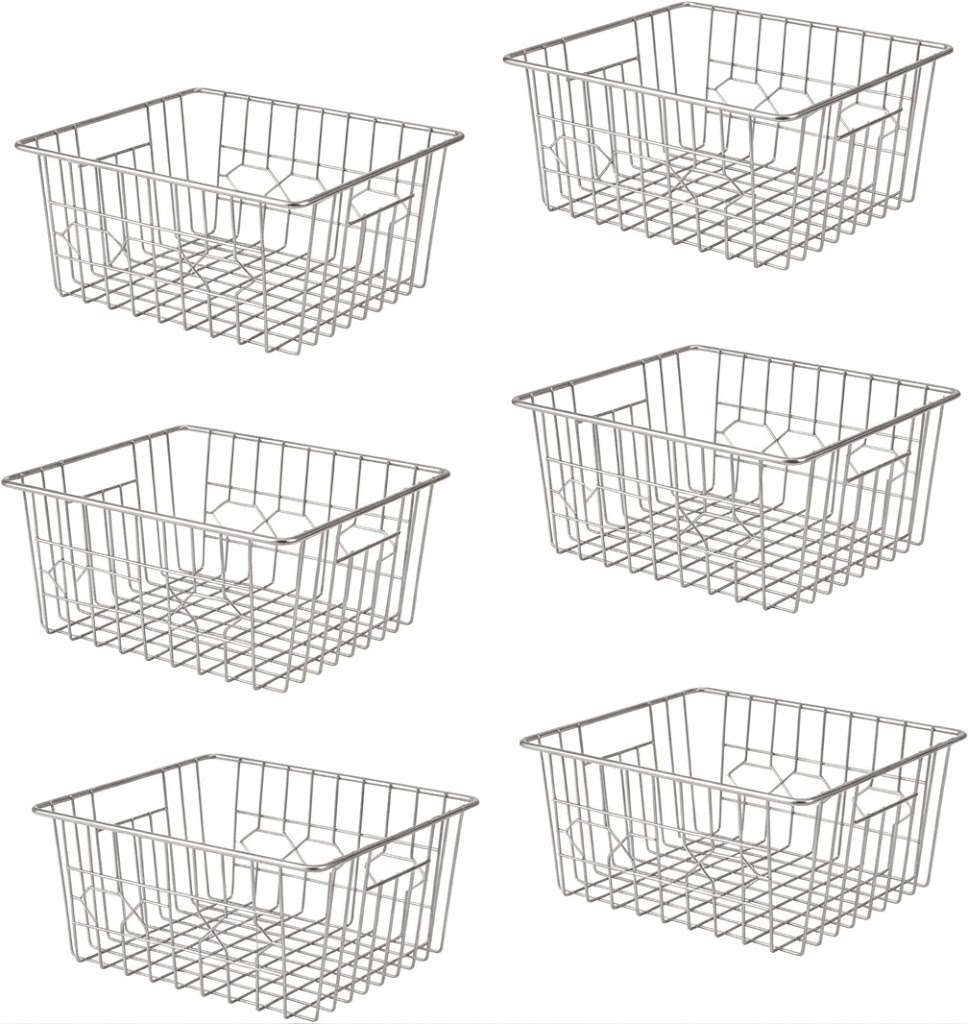
Upright Freezer Organizer Bins, Freezer Baskets for 14, 15 cu.ft Standup Freezer, Wire Storage Baskets with Built-in Handles for Frozen Foods,
Check Price on AmazonThink about how you plan to eat the fruit. Fresh apples or oranges are easy to pack and eat as they are. Frozen fruit is often more convenient for cooking and blending, but it usually needs thawing for a snack with a firm texture. A lower price is useful only if the product fits your routine.
How to compare the real cost at the store
- Compare unit prices. Check the shelf label for cost per ounce or pound instead of comparing package totals. Packages often differ in size, and a larger bag may not be a better deal.
- Compare the edible amount. Account for peels, pits, stems, and liquid you will discard. Consider whether frozen fruit is already trimmed and how much liquid you expect after thawing.
- Compare like with like. Whole strawberries are not directly comparable to sliced strawberries, and sweetened fruit is not the same product as unsweetened fruit. Check the ingredient list.
- Estimate how much you will use. A large bag is a poor bargain if it stays open for months or develops freezer burn. Buy a size that suits your freezer space and eating habits.
- Check promotions and store brands. A sale can make fresh fruit the better value, while a store-brand frozen bag may cost less than a premium label. Compare the fruit and ingredients, not only the branding.
A useful calculation is the cost per edible serving: divide the package price by the number of portions you expect to use. Estimate portions based on your usual recipe or snack, not the serving size printed on the package if that amount does not match how you eat.
Does frozen fruit have fewer nutrients?
Frozen fruit can retain much of its nutritional value. It is usually frozen after harvest, which helps preserve it during storage. Fresh fruit can also be nutritious, but the time between picking, transport, display, and eating can vary. Neither label alone tells you the full nutritional story.
Processing and storage can affect some nutrients, and different fruits respond differently. Still, a fruit does not become nutritionally empty simply because it is frozen. Check the ingredient list for added sugar or syrup if you want plain fruit; many frozen options contain fruit alone.
Texture is often a more noticeable difference than nutrition. Ice crystals can damage plant cells, so thawed fruit may be softer and release juice. That makes it a natural fit for smoothies, oatmeal, sauces, and baking, but less suitable if you want firm slices for a fruit platter.
Common reasons frozen fruit costs more
Some frozen fruit is more expensive than its fresh counterpart. A variety may be harder to grow, harvest, or process. Organic certification, specialty packaging, imported supply, a smaller production run, or extra preparation can also raise the shelf price.
There may be a higher cost for fruit sold in individual portions or resealable packages. These formats can be convenient, but the packaging and portioning add costs. If you use fruit regularly, a larger bag may have a lower unit price, provided you can store it properly.
Prices also differ between retailers and regions. A store with strong frozen-food sales may offer lower prices than a shop with limited freezer space. Local fresh fruit may be inexpensive near its growing region, while frozen products have to travel through cold storage and distribution.
How to get better value from frozen fruit
- Choose unsweetened fruit if you want the fruit itself without added sugar. Read the ingredients because front-of-package claims do not always tell you everything.
- Buy fruit you will actually use. A lower price for an unfamiliar variety is not a saving if it remains untouched.
- Portion large bags. Transfer a practical amount to a freezer-safe container or bag, and close the original package tightly to limit air exposure.
- Use frozen fruit in recipes that welcome softness. Smoothies, pancakes, oatmeal, sauces, and muffins are usually less sensitive to texture changes.
- Thaw only what you need. Thawed fruit is softer and more perishable than fruit kept frozen, so follow package directions and refrigerate it if it will not be used right away.
One common mistake is judging the deal by package weight alone. A frozen bag may include ice crystals or fruit pieces that release liquid as they thaw, while fresh fruit can include parts you do not eat. The best comparison is the cost of the usable amount in the form you actually need.
Why seasonal timing matters even for frozen fruit
Freezing makes fruit available outside its harvest season, but it does not remove seasonality from the price. The cost of the raw crop, labor, energy, packaging, storage, and transportation still varies. A strong harvest can increase supply and lower the cost of fruit for processing; a smaller harvest can have the opposite effect.
Stores may also change prices based on promotions, contracts, and how much inventory they have. A frozen bag on sale does not necessarily mean the fruit is at its natural low point, just as a high price does not prove that the fruit is better quality. Look at the unit price over several shopping trips if you buy it regularly.
Keeping a small record can help. Note the price per ounce for the fruits you use most, then compare it with fresh prices during their local season. This simple habit shows which fruit is a reliable frozen-food bargain for your household and which one is better bought fresh at certain times.
why frozen fruits are cheaper often reflects seasonal harvests, bulk processing, longer storage, and less pressure to sell before the fruit spoils. Those factors can make frozen fruit a practical value, but fresh fruit may cost less when it is in season or on sale.
Before you buy, compare unit prices and estimate the usable portions you will actually eat. Choose the option that fits your recipes and routine, then store it properly so the savings do not end in wasted food.
