how does the frozen song go: Find the right version
If you mean the best-known song from Disney’s Frozen, it is “Let It Go,” performed in the film by Idina Menzel as Elsa. The song’s central idea is Elsa deciding to stop hiding her powers and live openly.
This guide helps you identify the song, distinguish the movie performance from the end-credits version, and find the complete lyrics through authorized sources. It also explains the scene’s meaning, who created the song, and what to know if you want to sing or play it. If you remember a different tune from the film, the song comparison below can help you find that one instead.
how does the frozen song go? It is usually “Let It Go”
The song most people mean is “Let It Go,” Elsa’s major solo in Disney’s 2013 animated film Frozen. Idina Menzel performs it in the movie. The memorable refrain includes the short phrase “Let it go,” while the rest of the song follows Elsa as she leaves her old life behind and accepts her magical ice powers.
The full lyrics are copyrighted, so this article cannot reproduce them. You can listen to the official recording or check a licensed lyrics source if you need every word. If you only wanted the title or the basic idea, the answer is “Let It Go”: a dramatic song about freedom, self-acceptance, and choosing not to hide.
People sometimes use “the Frozen song” to mean another number from the movie. Anna, Olaf, and Kristoff each have memorable songs, and the sequel has its own well-known tracks. Use the table below to match the tune you remember to its title and singer.
Which Frozen song are you thinking of?
Frozen has several songs with distinct sounds and stories. “Let It Go” is the one most closely associated with Elsa, but a scene, character, or musical style can help identify another track. This comparison focuses on songs from the first film and its end credits.
| Song | Who performs it | How to recognize it | Best match if you remember |
|---|---|---|---|
| “Let It Go” | Idina Menzel as Elsa | A powerful solo that builds as Elsa embraces her abilities | A dramatic Elsa song and the famous refrain |
| “Do You Want to Build a Snowman?” | Kristen Bell as Anna, with other voices as Anna grows up | Anna repeatedly tries to reach her sister through a closed door | A childhood scene, sisters, or a recurring invitation |
| “For the First Time in Forever” | Kristen Bell as Anna, with Idina Menzel as Elsa | Anna anticipates the castle opening, while Elsa worries about the day | A bright song about the coronation and a long-awaited celebration |
| “Love Is an Open Door” | Kristen Bell and Santino Fontana as Anna and Hans | A cheerful duet between Anna and Hans | A playful romantic duet from the castle |
| “In Summer” | Josh Gad as Olaf | Olaf happily imagines enjoying warm weather | A comic solo by the snowman |
| “Fixer Upper” | Maia Wilson as Bulda, with the trolls and cast | The trolls sing about Kristoff and offer matchmaking advice | A lively group number with the trolls |
| “Let It Go” end-credits version | Demi Lovato | A separate pop recording that plays over the end credits | A contemporary pop version rather than Elsa’s scene performance |
What happens during “Let It Go”?
Elsa sings “Let It Go” after her powers are revealed and she flees Arendelle. For much of her life, she has tried to suppress her ability to create ice and snow. She fears hurting others, especially Anna, so hiding her powers has become part of how she lives.
In the mountains, Elsa is alone and no longer has to keep up the appearance of being ordinary. The song tracks her changing feelings: fear and frustration give way to relief, confidence, and a willingness to be seen. She creates an ice palace and changes her clothing as the music grows more forceful.
The scene makes the song’s emotion visible. Elsa’s movements become larger, the setting transforms, and the music rises toward a bold refrain. These details help explain why the number is often remembered as both a character moment and a theatrical set piece.
There is also a difference between feeling free in that moment and solving every problem. Elsa has stopped hiding, but she has not yet learned how to control her powers safely or repair her relationship with Anna. The rest of the story shows that independence alone does not resolve the harm caused by fear and isolation.
Who wrote and performed the song?
“Let It Go” was written by songwriters Kristen Anderson-Lopez and Robert Lopez for the film. Idina Menzel, who voices Elsa, performs the version heard in the movie. Menzel’s musical-theater background suits the number’s gradual build from restrained lines to a full, high-energy finish.
Demi Lovato recorded a separate version for the end credits. It uses the same song but has a pop arrangement and a different vocal performance. That is why a search for the track may bring up two recordings that sound noticeably different.
For the story, the movie version is the most direct choice: it is performed by Elsa during the scene and reflects her feelings at that point in the plot. The end-credits recording is a studio pop version. Neither is a mistaken recording; they serve different purposes.
Where can you find the full lyrics or listen legally?
To hear the complete song, look for the official Frozen soundtrack or an authorized music service. Search using the title and performer, such as “Let It Go Idina Menzel,” to find the movie recording rather than the end-credits version. For the pop recording, include Demi Lovado’s name in your search. (The correct spelling is Demi Lovato.)
If you need the words for singing, studying, or checking a line, use lyrics displayed by a licensed music service or another authorized publisher. A search result may show an excerpt, but it might not identify which recording it matches. Confirm the performer and version before learning the lyrics.
For a child learning the song, listening to the movie soundtrack can make the timing and phrasing clearer. Follow along with an authorized lyric display if available, and pause between sections to practice. The song has a wide vocal range and a climactic ending, so singing it in a comfortable key matters more than copying the original performance exactly.
How to sing or play “Let It Go” comfortably
The original performance is a demanding musical-theater solo. It moves from a more contained opening to sustained, powerful singing. You do not need to match Menzel’s volume or pitch to sing the song well; forcing a high note can strain your voice.
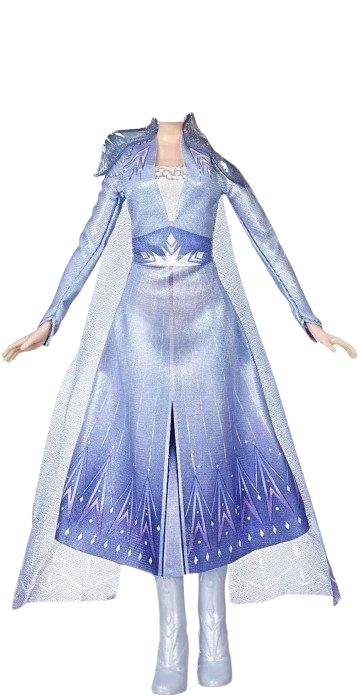
Disney Frozen Elsa Fashion Doll with Long Blonde Hair & Blue Outfit Inspired by Frozen 2
Check Price on Amazon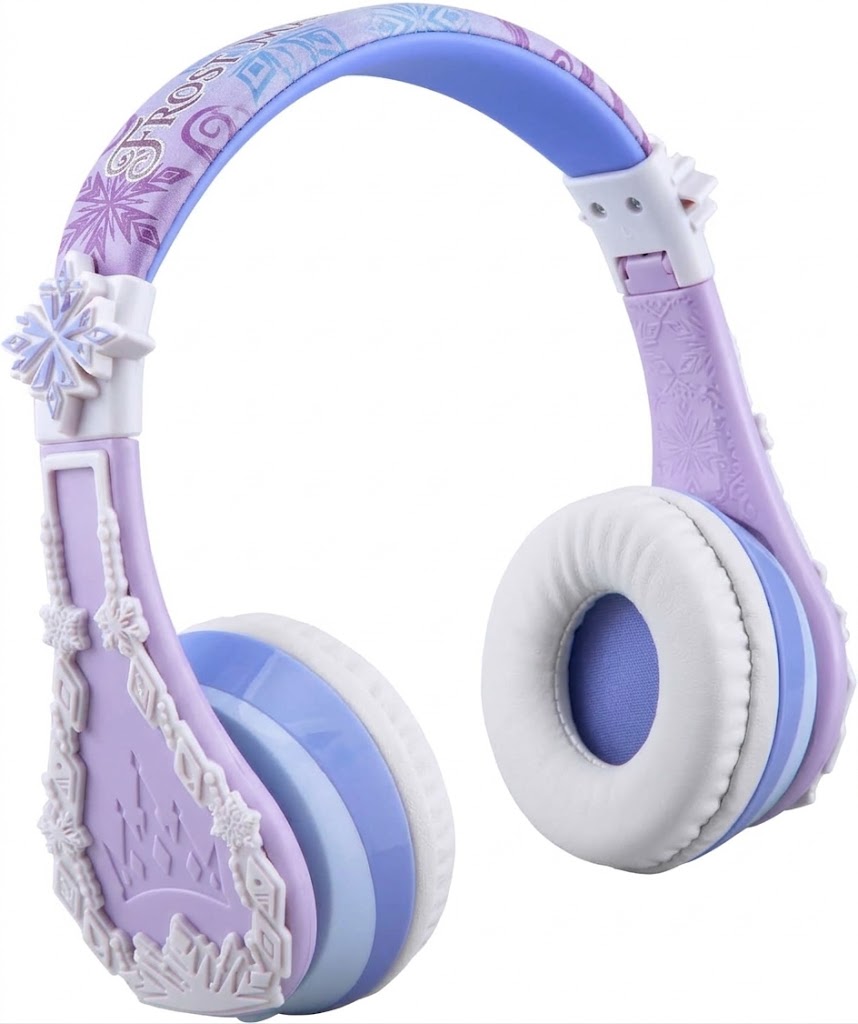
Frozen 2 Bluetooth Headphones with Microphone
Check Price on Amazon- Choose the recording you want to learn. The movie and end-credits versions have different arrangements. Pick one before practicing so the melody and timing do not catch you by surprise.
- Listen through once without singing. Notice where the music grows, where phrases begin, and how the accompaniment changes. This gives you a map of the song before you focus on individual notes.
- Start with short sections. Practice a few lines at a time rather than repeating the entire song. Short sections make it easier to identify a difficult interval, breath point, or rhythm.
- Use a comfortable key. A licensed karaoke track, sheet music arrangement, or accompanist may let you change the key. A lower or higher version can make the song more comfortable for your voice.
- Warm up gently and stop if your throat hurts. A relaxed warm-up helps prepare your voice. Pain, persistent hoarseness, or a feeling of strain is a cue to stop rather than push harder.
- Practice the ending with control. The final section is intense, but volume is not the same as vocal strength. Keep your breath steady and use a version suited to your range.
If you are learning it on piano, search for sheet music arranged for your level and check that it names the version you want. A simplified arrangement can preserve the recognizable melody while reducing difficult chords or wide hand movements. Do not assume that every online piano tutorial uses the film’s exact key or arrangement.
Why does the song matter to Elsa’s story?
At first, Elsa treats her powers as something dangerous that must be hidden. Her parents teach her to conceal them, and her fear grows because she has little chance to practice using them openly. “Let It Go” marks a sharp change: she is no longer trying to behave as though the powers do not exist.
That choice is emotionally understandable, but the scene is not the story’s final answer about how Elsa should live. She interprets solitude as safety and assumes she can avoid hurting anyone by staying away. The plot later challenges that assumption. Elsa needs both self-acceptance and a way to manage her abilities with care.
This distinction helps make sense of the song’s place in the film. It celebrates the relief of no longer pretending, while the larger story explores responsibility, trust, and connection. The number is not simply a message that rules or relationships do not matter; it shows one character taking a first, imperfect step toward accepting herself.
Common mix-ups about the Frozen song
Is “Let It Go” sung by Anna?
No. In the film, Elsa sings “Let It Go,” and Idina Menzel performs it. Anna has her own songs, including “Do You Want to Build a Snowman?” and “For the First Time in Forever.” Their voices and scenes can be easy to mix up if you remember only a short melody.
Is the Demi Lovato recording the version in the movie?
No. Demi Lovato’s version is an end-credits recording. The scene inside the film uses Idina Menzel’s performance as Elsa. Searching by performer is the simplest way to avoid selecting the wrong track.
Is “Let It Go” from Frozen 2?
No. It is from the first Frozen film, released in 2013. The sequel has different songs, including Elsa’s “Into the Unknown.” If you remember a later Elsa solo with a strong sense of being called toward something, you may be thinking of that song instead.
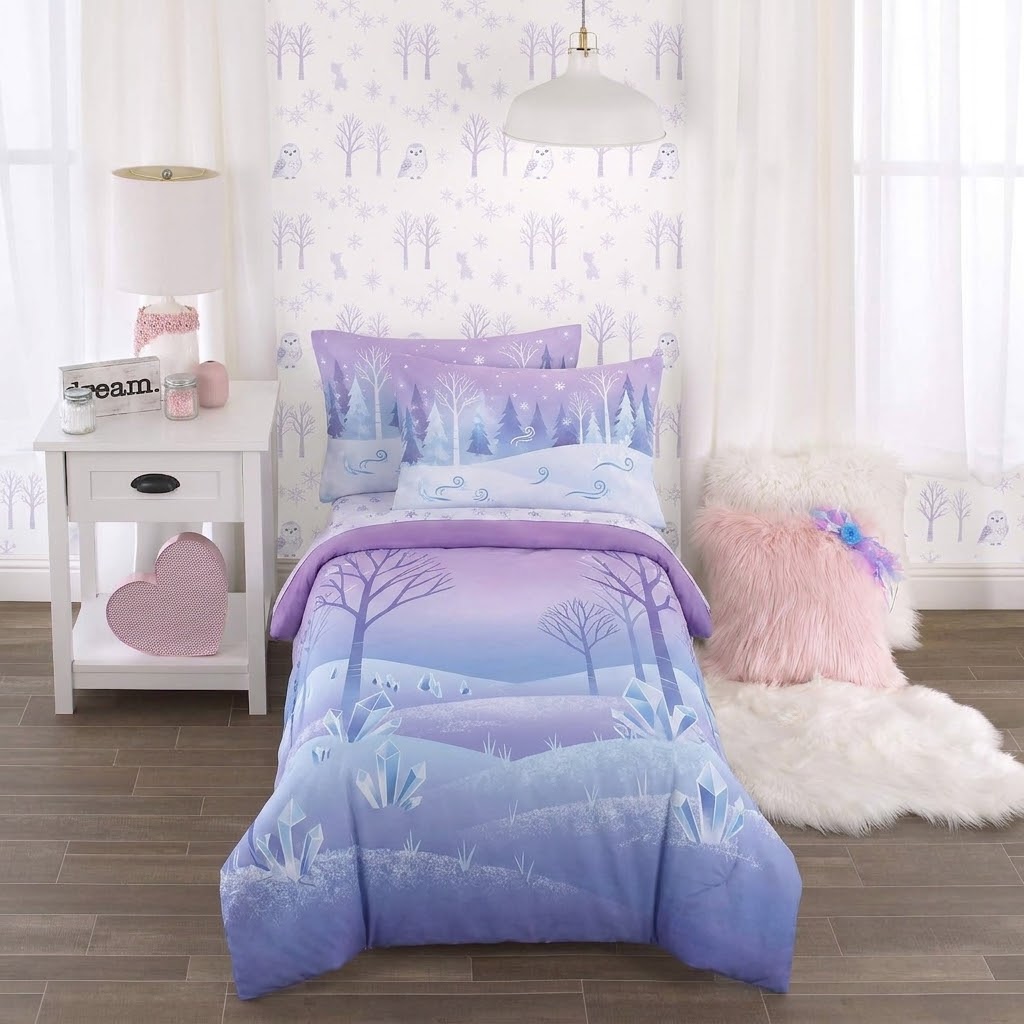
Disney Frozen 2 Lavender, Light Blue and Purple Forest Spirit 4 Piece Toddler Bed Set - Comforter,
Check Price on AmazonDoes the title tell the whole meaning?
Not quite. The phrase points to Elsa’s decision to release the fear and secrecy she has carried, but the scene also shows her choosing isolation. The title is a useful clue, not a full summary of her character arc.
Can you find the song by humming it?
Often, yes. Music recognition tools can identify a song from a recording, and some can match a melody you hum. Results are not guaranteed, especially if you hum only a few notes or sing in a different key. If recognition fails, try adding details such as “Elsa,” “ice palace,” or “Frozen 2013” to a text search.
A quick way to identify the version you heard
Use the scene and sound as clues. If you remember Elsa building an ice palace, look for the Idina Menzel movie recording. If you heard a polished pop track over the credits, look for Demi Lovato’s version. If the song features Anna, Olaf, or the trolls, consult the comparison table rather than assuming every memorable Frozen number is “Let It Go.”
When you find a result, check the track title and singer before saving it. Search pages often group soundtrack tracks, covers, karaoke recordings, and short clips together. A clear performer credit helps you choose the recording that matches the scene or sound you remember.
One detail people often miss is that the two “Let It Go” recordings are not simply alternate uploads of the same performance. They are distinct recordings for different parts of the film experience. If one version does not sound like the tune you remember, check the other before concluding you have the wrong song.
The Frozen song most people mean is “Let It Go,” Elsa’s solo performed by Idina Menzel in the film. It is about Elsa beginning to accept her powers, though the story later shows that freedom also requires care and connection.
For the movie scene, search for “Let It Go Idina Menzel”; for the end-credits pop version, search for Demi Lovato. If the melody you remember belongs to another character, use the comparison table to narrow it down.