what is the frozen song let it go about: Elsa’s choice
what is the frozen song let it go about? It is Elsa’s declaration that she will stop hiding her ice powers and live without the fear and rules that have controlled her. The song marks a turning point in Disney’s Frozen, but its message is more complicated than simple freedom.
To understand the scene, it helps to look at Elsa’s fears, the lyrics’ central ideas, and what happens after she sings. This article explains how the song works in the story, why it became so memorable, and what its message does—and does not—say about accepting yourself.
what is the frozen song let it go about
“Let It Go” is about Elsa choosing to stop concealing her magical ability to create ice and snow. For years, she has tried to control that ability because she fears hurting other people. After her powers are revealed in public, she flees Arendelle and sings the song alone on a mountain, deciding that she will no longer shape her life around other people’s expectations.
The moment feels like a release. Elsa takes off the gloves she has worn to hide her powers, builds an ice palace, and uses her magic openly. Yet the scene also shows her pulling away from the people she loves. The song captures both sides of that decision: the relief of no longer pretending and the risk of mistaking isolation for freedom.
That contrast matters. The song is not a simple instruction to reject every rule or relationship. It expresses what Elsa believes she needs at this point in the story, while the rest of the film shows her learning that being herself does not require abandoning love or responsibility.
Why Elsa sings it at this point in the story
Before the song, Elsa has spent much of her life treating her power as a danger she must keep secret. When she was a child, she accidentally injured her younger sister, Anna, with ice magic. Their parents responded by keeping Elsa’s ability hidden and limiting contact between the sisters. Elsa learned to associate control with safety and openness with risk.
At her coronation, Elsa tries to maintain her composure, but Anna’s confrontation pushes her emotions past what she can manage. Her powers become visible to the court and the people of Arendelle. Elsa runs away, afraid that she has frightened everyone and that she may cause further harm. The song begins after she has reached the mountains, removed from the immediate pressure of the palace.
Its placement makes the song a turning point, not a full solution. Elsa has gained distance from the public judgment she fears, but she has not yet made peace with what happened to Anna or with the needs of her kingdom. She is making a choice based on the information and emotions she has in that moment.
From secrecy to self-expression
Elsa’s gloves have a clear story function: they help her conceal her powers and remind her to keep them restrained. Removing them signals a change in how she sees herself. Instead of treating her magic only as something to hide, she begins to explore what she can do.
The ice palace gives that change a visible form. Elsa creates a place that reflects her power and belongs to her alone. It is beautiful and impressive, but it stands far from the people she left behind. The setting supports the song’s emotional contradiction: Elsa feels free because nobody is watching, yet she is also separated from everyone who might help her.
What the song’s main ideas mean
The song’s meaning is built around a shift in Elsa’s thinking. She moves from trying to satisfy expectations to deciding that she can no longer keep living in fear. Several connected ideas make that shift feel powerful while leaving room for the story to question it.
Self-acceptance
Elsa begins to accept that her powers are part of her rather than a secret that can be erased. That does not mean she understands every consequence of her magic. It means she stops treating her identity as something she must conceal to earn acceptance.
This is why the song can resonate with people who have felt pressure to hide a part of themselves. The story gives Elsa’s struggle a fantasy form, but the emotional idea is recognizable: constantly monitoring yourself can be exhausting. Being honest about who you are can feel like relief, especially after a long period of fear.
Freedom from judgment
Elsa imagines that the mountain will free her from judgment. Away from the court, she does not have to perform the role of a perfect queen or worry about what people will think of her powers. The open space and the growing palace reinforce her sense that she can make her own choices.
But the scene also shows a limitation in that idea. Leaving the people who judge you can provide immediate relief, but it does not necessarily resolve the fear behind that choice. Elsa still believes that closeness is dangerous, so she treats solitude as protection. The later story tests whether she can accept herself while remaining connected to others.
Control and fear
For Elsa, control has meant trying to prevent harm by suppressing emotion and hiding her ability. The song marks her rejection of that constant restraint. However, it does not establish that all control is harmful. Learning how to use a powerful ability safely is different from denying that the ability exists.
This distinction helps explain Elsa’s later development. She needs more than permission to use her magic. She also needs to understand it, manage it, and trust that relationships can survive moments of fear and conflict. Self-acceptance and responsibility are not opposites in the film; Elsa has to learn how to hold both.
Is “Let It Go” a song about empowerment or escape?
It is both, and the tension between those readings is part of what makes the scene effective. The song gives Elsa a moment of agency. She acts without asking for approval, explores her ability, and stops trying to meet a standard that has made her afraid. At the same time, she leaves without resolving the damage caused by the freezing winter or repairing her relationship with Anna.
| Reading | What supports it | What to keep in mind | Best description |
|---|---|---|---|
| Empowerment | Elsa stops hiding her power and makes choices for herself. | Her new confidence does not yet include a plan for helping Arendelle. | A major moment of self-expression |
| Escape | She leaves the people and problems she fears instead of facing them. | Leaving gives her space, but it does not settle the conflict. | A short-term refuge |
| Self-acceptance | She recognizes that her magic is part of her life. | Acceptance is only one step; she still needs skill and connection. | The clearest emotional theme |
| Rebellion | She rejects the expectations placed on her. | The film does not suggest that every obligation is unfair or should be discarded. | A response to pressure, not the whole message |
The most useful interpretation is that “Let It Go” shows a necessary but incomplete break from fear. Elsa’s decision to stop hiding matters, but the song does not prove that every choice she makes afterward is wise. The film lets the audience feel her relief while showing the consequences of acting alone.
How the music and staging strengthen the message
The song’s emotional effect comes from more than its words. Its sound and visuals make Elsa’s internal change visible and audible. It begins with a restrained feeling and builds into a broad, forceful performance, following her movement from hesitation toward confidence.
The arrangement grows as Elsa’s actions become more daring. The rising energy gives the scene a sense of release, while the repeated musical phrases make the central idea easy to remember. The melody supports the feeling that Elsa is stepping into a new identity rather than simply explaining what she thinks.
The visuals work in the same way. Elsa moves from a snowy, exposed mountain setting to a palace she creates herself. Her clothing changes, her posture becomes more assured, and her magic fills the space around her. These details make an inward decision legible to the viewer without requiring a long explanation.
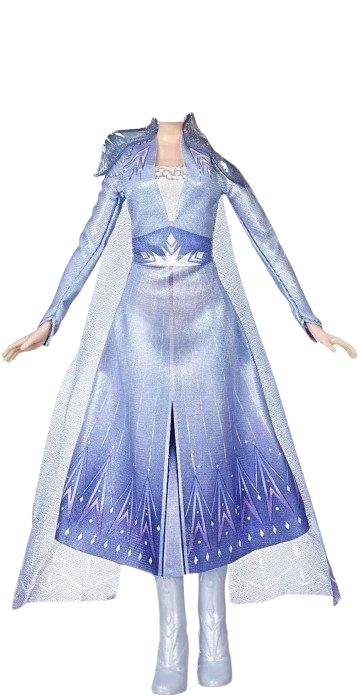
Disney Frozen Elsa Fashion Doll with Long Blonde Hair & Blue Outfit Inspired by Frozen 2
Check Price on Amazon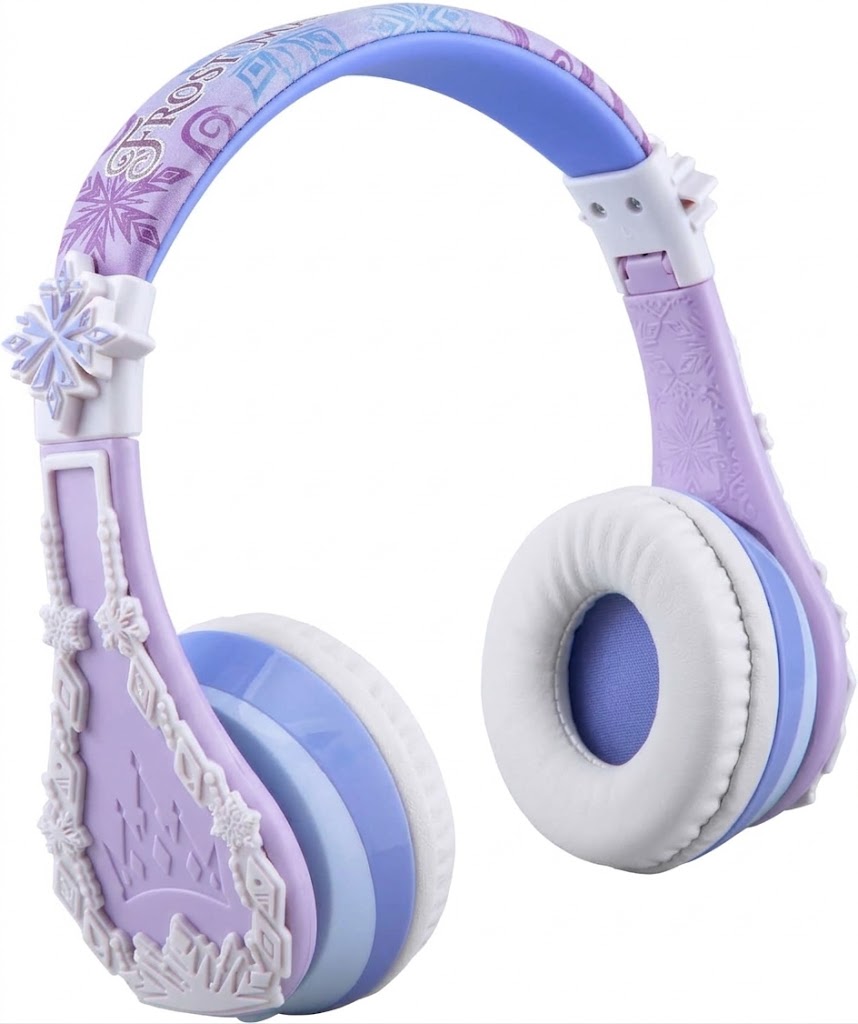
Frozen 2 Bluetooth Headphones with Microphone
Check Price on AmazonThe scene’s confidence is also deliberately persuasive. It encourages the audience to share Elsa’s exhilaration before the plot turns attention back to the people and problems she left. That does not make the song’s feeling false. It means the audience experiences the appeal of escape before seeing its limits.
How the song connects to Elsa and Anna’s relationship
Although Elsa sings alone, the song is closely tied to her relationship with Anna. Elsa’s fear began with an accident that hurt her sister, and the sisters’ separation made it harder for them to understand each other. Elsa believes distance will protect Anna, but Anna experiences that distance as rejection and loss.
When Elsa leaves, she is not simply rejecting the kingdom’s rules. She is also trying to avoid the possibility of hurting Anna again. This makes her choice emotionally understandable, even as it creates new trouble. Her love for her sister is real, but fear has shaped how she expresses it.
Anna’s role later in the film challenges Elsa’s assumption that separation is the safest answer. Their relationship cannot be repaired by Elsa hiding her powers or by Anna pretending the separation caused no pain. The story instead asks them to trust one another and face danger together.
That relationship changes how the song reads when viewed as part of the whole film. In the moment, Elsa defines freedom as being alone and beyond other people’s expectations. Later events show that she can be herself while still letting Anna close. The film’s emotional resolution depends on connection, not on Elsa erasing her identity.
What “Let It Go” does not mean
A catchy song can invite listeners to reduce its message to one phrase. The story is more careful than that. These distinctions help prevent common misunderstandings:
- It does not mean Elsa’s powers have no consequences. Her magic can affect other people and the environment, so she needs to understand how to use it.
- It does not mean every rule is oppressive. Some expectations harm Elsa, but other responsibilities—such as caring for the people affected by the winter—remain important.
- It does not mean isolation is the same as self-acceptance. Elsa feels relief alone, but the film shows that lasting trust requires relationships.
- It does not mean she has solved her fear in one scene. The song marks a shift in attitude, not the end of her character development.
A useful point many quick interpretations miss is that the song’s message changes with context. Heard by itself, it can sound like a complete declaration of freedom. Heard within the film, it is a vivid expression of Elsa’s feelings at one stage of her growth. The story neither dismisses that freedom nor treats it as the final answer.
Who wrote and performed “Let It Go”?
“Let It Go” was written by Kristen Anderson-Lopez and Robert Lopez for Disney’s 2013 animated film Frozen. Idina Menzel performs the song as Elsa in the film. The song was created for a particular dramatic moment: Elsa has left Arendelle and is trying to decide what life might look like when she no longer hides her powers.
The performance is central to how the scene lands. Menzel’s voice moves from a more contained delivery toward a stronger, more open sound, matching Elsa’s change in confidence. The music, performance, animation, and story all support the same character moment, which helps the number feel like part of the plot rather than a pause from it.
There is also a separate, more pop-oriented version performed by Demi Lovato over the film’s end credits. That version is not the same as the in-story performance by Menzel. The distinction is useful if you are comparing recordings: Menzel’s version belongs to Elsa’s scene, while Lovato’s version plays during the credits.
Why the song became memorable to so many listeners
The song combines a clear emotional change with a strong visual sequence. Elsa’s problem is understandable without extensive background: she has hidden something important and is tired of being afraid. The scene then gives that feeling a dramatic outlet through music, movement, and the creation of the ice palace.
Its central idea can also connect to experiences beyond the plot. A listener might relate to feeling judged, needing privacy, or wanting to stop pretending. Those connections do not require the listener to share Elsa’s exact situation. The song leaves enough space for personal meaning while still belonging to a specific character and story.
The music also makes the character’s shift easy to follow. Elsa’s growing confidence is reflected in the song’s changing intensity and the scene’s expanding visuals. Even viewers who do not analyze the lyrics can understand that something has changed: she is acting with a freedom she has not allowed herself before.
At the same time, the song remains memorable because its emotional high point is not the same as the film’s final answer. Elsa’s exhilaration is genuine, but the consequences that follow give the story more depth. A moment can feel triumphant and still leave important work unfinished.
How to interpret the song when you hear it again
Listen for the difference between what Elsa feels and what the story eventually asks her to learn. In the song, she wants freedom from fear and scrutiny. Notice how the scene makes that desire feel thrilling, then remember that her isolation leaves unresolved harm and worry.
- Start with the scene. Recall that Elsa has just been exposed and has fled the people she fears disappointing or hurting.
- Track the change in her behavior. She moves from concealment to openly using her power, so the song marks a character decision.
- Notice the cost of her choice. The palace gives her a refuge, but her departure leaves Anna and Arendelle to deal with the crisis.
- Compare the moment with the ending. Elsa’s later growth shows that self-acceptance can coexist with care, trust, and responsibility.
This approach helps you avoid treating the song as either a flawless statement of independence or a mistake the film wants you to condemn. It is an emotionally honest snapshot of Elsa reaching for freedom before she understands what a balanced version of that freedom will require.
“Let It Go” is about Elsa choosing to stop hiding her powers and step away from fear. Its exhilaration is real, but the film also shows that isolation does not resolve every problem.
Remember the song’s place in Elsa’s larger story: self-acceptance is a first step, while connection and responsibility matter too. For a closer reading, watch the scene alongside what happens to Anna and Arendelle afterward.

Disney Frozen Kids' Bezel Stainless Steel Time Teacher Analog Nylon Strap Watch
Check Price on AmazonThat balance is the clearest answer to what is the frozen song let it go about: becoming more honest about yourself without assuming you must face everything alone.